
Planning a trip to the Democratic Republic of the Congo (DRC) from South Africa? Then the term Democratic Republic E-visa for South African Residents should be on your radar. This article is your friendly, traveler‑style guide explaining how South African citizens can secure an e-visa to the DRC — what it is, how to apply, what to expect, and how to navigate travel there with confidence. Think of me as a fellow traveller sharing what I wish I knew before booking my flights.
Do South Africans need a visa for DRC?
Yes — if you hold a South African passport and plan to visit the DRC, you require a visa. More specifically, a DRC e‑visa is available for South African residents wishing to travel.
Thanks to the e‑visa system, you don’t need to wait for a physical visa stamp (assuming you use e‑visa service). The “Democratic Republic Evisa for South African Residents” is designed to make entry smoother, especially for travellers who prefer planning everything online in advance.

Can I apply for an e-Visa online?
Absolutely — yes. South African citizens are eligible to apply for the DRC e‑visa online. The process involves submitting required documents digitally (passport scan, photograph, application letter, etc.). Once approved, you receive an electronic visa, which you present when you arrive in the DRC.
How to get a visa for the Democratic Republic of Congo?
Here’s a step-by-step breakdown, as you might in a travel‑blog post:
1. Choose the right visa type
For most travellers, the “ordinary flying visa” (i.e. tourist/business e‑visa) suffices. According to typical guidelines, this visa is:
-
Validity: 90 days
-
Stay duration: 7 days per entry (that is, this visa type allows a stay up to 7 days)
-
Entry: Single‑entry.
2. Gather necessary documents
You will need the documents for Congo visa:
-
A valid passport (valid for at least six months, with blank pages)
-
A recent passport‑style photograph (colour, plain background, full face)
-
Application letter stating your intention to visit, travel plans, and purpose of the trip.
If someone in the DRC is vouching for your visit (host, relative, business contact), additional paperwork may be required — such as their ID/visa copy, a copy of their passport, and sometimes a letter of guarantee. For child travellers, extra documentation such as birth certificate, parental consent letter, and copies of guardian’s ID/passport may be necessary.
Health‑wise, many sources also advise having a Yellow Fever vaccination certificate, given that DRC falls in a region where such vaccinations are often required for international arrivals.

3. Submit the application and wait for processing
Once you have all your documents, fill out the e‑visa application online. Processing times for the “ordinary flying visa” under the “Democratic Republic Evisa for South African Residents” scheme are typically:
-
Normal: 11–13 working days
-
Rush: 8–11 working days
-
Super‑Rush: 5–8 working days (if you need urgent travel)
It’s smart to apply well in advance — at least a few weeks before your planned travel date.
4. Receive the e‑visa and travel
If approved, you’ll get an electronic visa (e‑visa) — usually via email or downloadable file. Present this at arrival along with your passport. Always ensure your passport remains valid and you carry any additional required documents (vaccination certificate, travel itinerary, return/ onward ticket, if applicable).
How much does a DRC visa cost?
Understanding the Democratic Republic of Congo visa fee is essential before applying. The total cost usually includes two main parts, especially if you apply through an agency for convenience. Here’s what these fees involve:
-
Visa Cost: This is the non-refundable fee paid directly to the Democratic Republic of Congo’s Authority for processing and issuing your visa.
-
Service Fee: This is an additional charge by a visa agency. It covers their professional assistance, including thorough review of your application, document verification, secure payment handling, and customer support.
What is the safest city in Congo?
Defining the “safest city” in the DRC is complicated because safety conditions vary widely across regions, and situation can change rapidly. Many advisories currently caution against travel to large swathes of the country.
That said, among the major cities, Lubumbashi is sometimes considered relatively safer than conflict‑prone regions, especially compared to the troubled eastern provinces or remote rural areas.
If you travel with caution — avoid risky zones, don’t wander alone at night, and use trusted transport — urban centres like Lubumbashi or the capital may be more manageable than unstable regions.
Still: you should always check the latest travel advisory from your home country before travelling.

What is the major airport of the Democratic Republic of Congo?
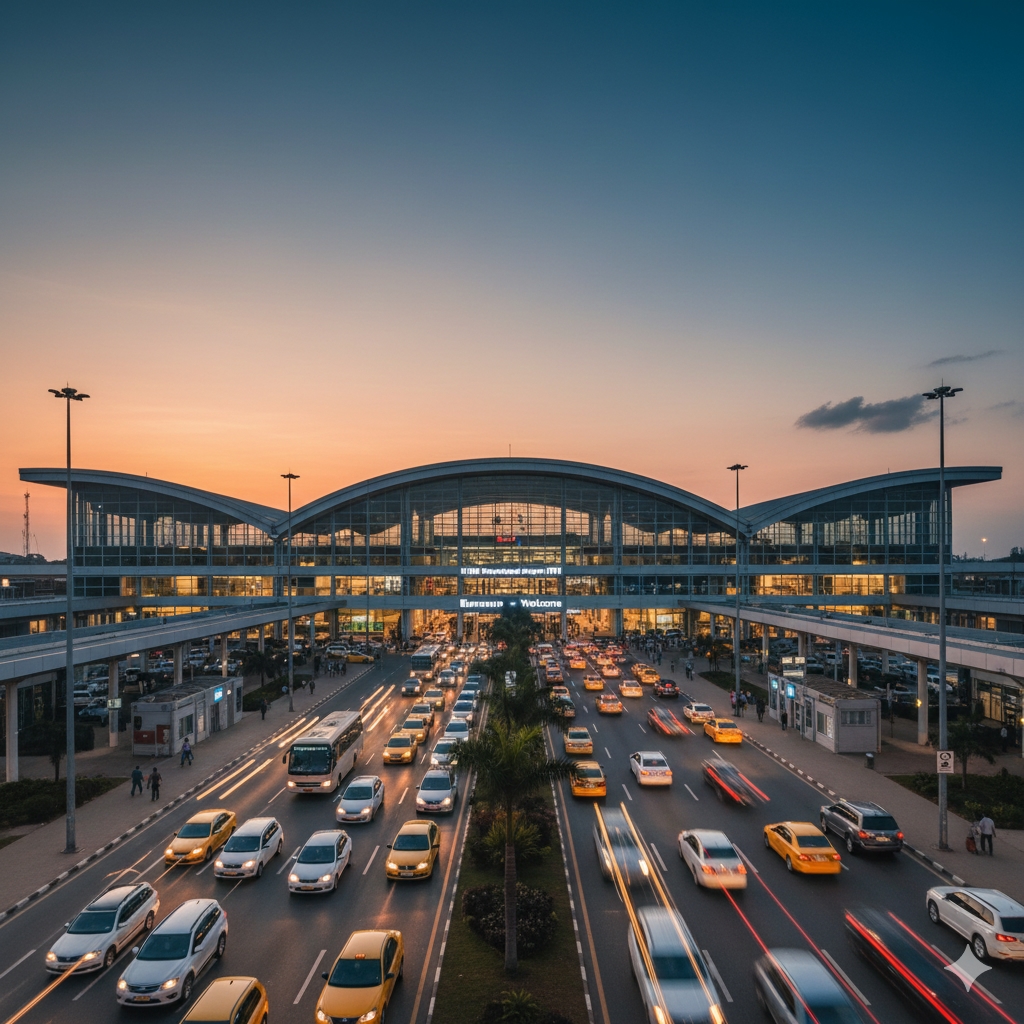
The primary international gateway for many foreign travellers is N’Djili International Airport (FIH), located near the capital city of Kinshasa.
If you fly towards the southeastern region, another important hub is Lubumbashi International Airport (FBM).
These airports typically handle most international arrivals and departures, so if you obtain the e‑visa, you’ll likely arrive via one of them.
Is it safe to travel to DRC now?
“Safe” is a relative word in the context of the DRC. Many international travel advisories — including from several Western — currently discourage non-essential travel to large parts of the country, especially due to conflict, armed groups, crime, and civil unrest. Some of the most common threats include:
-
Street crime, robbery, and scams (particularly in urban areas like Kinshasa). Mostly near hotels, markets, or public transport.
-
Risk of kidnapping or “express kidnappings,” sometimes by criminals posing as police or security personnel.
-
In conflict‑affected provinces (especially in eastern and certain central regions), there is significant risk from armed conflict, banditry, and terrorist activity.
-
Limited infrastructure and unreliable public services (transport, healthcare, emergency response) in remote areas.
Because of these risks, many maintain advisories telling their citizens to avoid travel to DRC except for essential reasons.
If you still decide to travel — perhaps to a safer city like Lubumbashi or via Kinshasa — take strong precautions: avoid walking alone at night, only use trusted transport, keep valuables out of sight, and stay aware of local security updates.

Is Congo tourist friendly?
The DRC has undeniable natural beauty — dense rainforests, rivers, wildlife, and a rich but complex culture. But the reality for tourists is mixed.
On one hand: there are corners of the country — often outside conflict‑zones — where tourism can be manageable if well planned. Some travellers report mild or no issues if they stay in safer areas, use local guides, and keep low profile. On the other hand: security risks — armed robbery, kidnapping, crime, volatile protests — are real. Some safari‑style activities or remote adventures may be especially risky.
So yes — the DRC can be tourist friendly, but only if you travel with caution, do thorough planning, and stay informed.
Which is the best eSIM for Congo?
If you don’t want to rely on local SIM card swaps on arrival, a traveller-friendly option is using an eSIM (digital SIM) that works across the DRC. Several providers offer eSIM data plans tailored for the country. Some points to consider:
-
Opt for a data‑only eSIM if your phone supports it (many recent smartphones do).
-
Choose a plan with fixed data allowance rather than vague “unlimited” offers, because many “unlimited” plans come with daily or total caps — after which speed may drop drastically.
-
For basic travel needs (maps, messaging, rides, browsing), a modest plan (e.g. 1–5 GB for a few days) can suffice. For longer stays or heavy usage, plan accordingly.
Overall — an eSIM from a provider covering DRC can be very convenient, especially if you want data as soon as you land and avoid the hassle of local SIMs.

Can you get a visa on arrival in Congo?
Generally: not recommended. The standard and safest path for South African travellers is to obtain the e‑visa before departure. Sources about the “Democratic Republic Evisa for South African Residents” indicate that the visa should be obtained online and presented on arrival.
If you don’t want to risk complications at the airport, getting the e‑visa in advance is by far the safer and more reliable option.
Does applying through an agent reduce stress compared to applying through the government website?
Does applying through an agent for a DRC e‑visa make your life easier than using the government route — or does it add risks and hidden trade‑offs?
What the agent site (Congo‑eVisa.com) offers — what they claim
If you go via Congo‑eVisa.com, this is what the site says you get:
-
Fully online application: You fill out application, upload passport copy and photo, submit documents and pay (via card or Western Union).
-
Convenience & comfort: Because it’s online, you can apply from home — no travel to foreign missions, no posting of physical documents.
-
Different processing tiers: They list Normal, Rush, and Super‑Rush options — giving flexibility if you are travelling soon.
-
Email delivery of e‑visa approval: Once approved, you get the e‑visa (or visa “pre‑approval”) by email, to print and present at entry.
-
Customer support and “hand‑holding”: The site suggests there’s support to help you avoid common mistakes — which might save time for travellers unfamiliar with visa requirements.
From a convenience and stress‑management perspective, using Congo‑eVisa.com does seem to offer a simpler, more streamlined experience — especially for first‑timers, travellers from distant places, or those who prefer doing things online.

Using the Government site
-
Complexity of the Process: Government websites often have detailed forms and strict requirements, which can be confusing and overwhelming for applicants.
-
Time-Consuming: Applicants must spend more time understanding instructions, filling forms correctly, and checking for errors, which can increase stress.
-
Limited Personalized Guidance: Unlike agents, government websites don’t provide individual support or advice, making it harder to resolve doubts or avoid mistakes.
Useful travel advice for a smooth experience
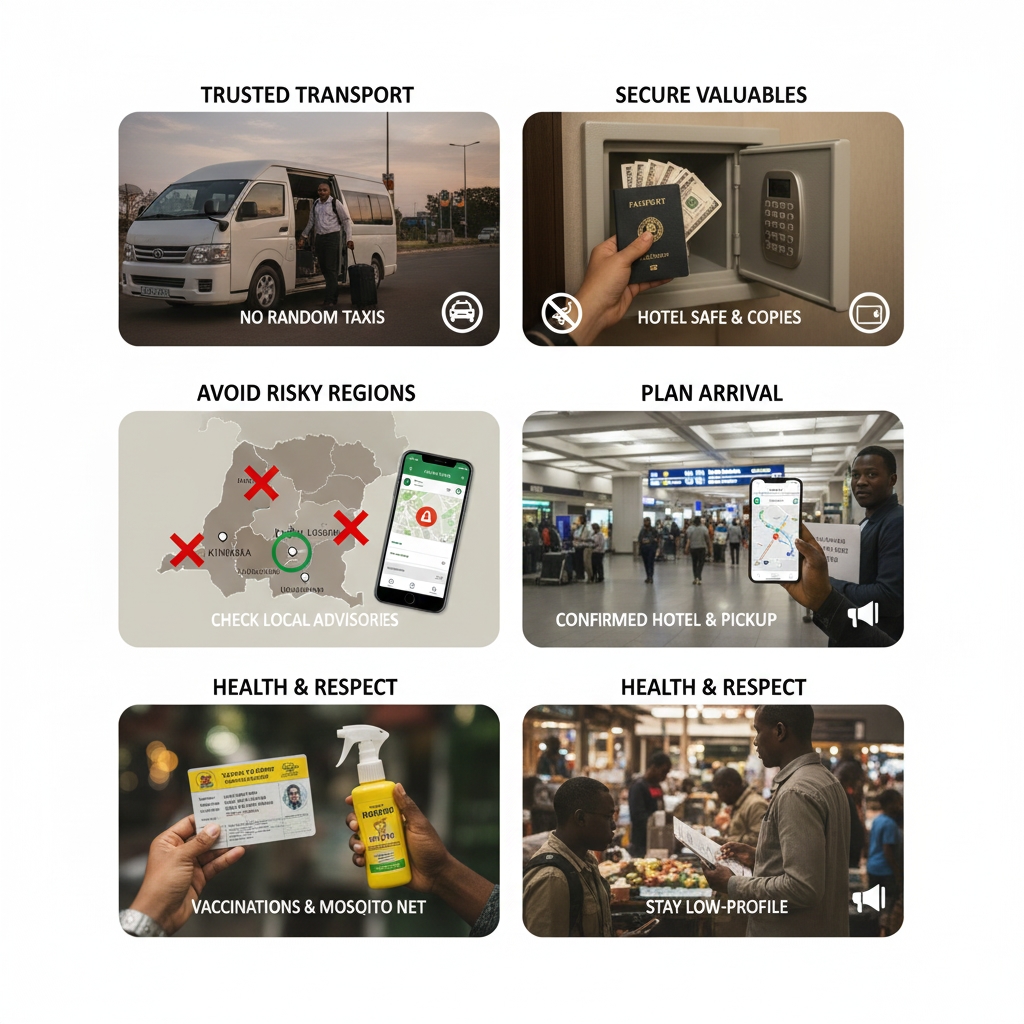
If you decide to travel to the DRC with your e‑visa, here are a few practical tips — as if I were tagging along with you on the trip:
-
Travel by trusted transport only — avoid random taxis or hailing rides on the street. Use hotels, trusted tour operators, or pre‑booked vehicles. Avoid traveling alone, especially after dark.
-
Secure your documents and valuables — keep passport, visa, extra copies safe (hotel safe if possible), don’t flash valuables, and carry minimal cash or important items in public.
-
Avoid risky regions — many provinces remain dangerous because of conflict. Stick to relatively stable cities or regions, and stay updated on local security advisories before and during your trip.
-
Plan your arrival carefully — choose your arrival airport (e.g. N’Djili in Kinshasa or Lubumbashi), and ensure you have confirmed accommodation and safe transport from airport to hotel.
-
Get travel health protection — carry proof of vaccinations (especially Yellow Fever), and take preventive measures against mosquito‑borne illnesses (mosquito repellent, antimalarial medication, etc.) if recommended.
-
Stay low-profile and respectful — avoid drawing unnecessary attention; be respectful of local customs and sensitivities; avoid large gatherings or demonstrations.
Conclusion
The “Democratic Republic E‑visa for South African Residents” opens a door to one of Africa’s most fascinating yet complex destinations. With the right preparation — getting your documents in order, applying in advance, and being cautious — a trip to the DRC can be done more smoothly. However, safety concerns remain real and the environment unpredictable. If you decide to go, treat it like an adventure that demands respect, awareness, and flexibility.
Ultimately, whether DRC becomes a memorable travel experience or a dangerous misadventure depends a lot on how well you plan and how cautious you stay.
FAQs for Congo e‑visa
Q: How long is the DRC e‑visa valid for travel?
A: For the ordinary flying visa used by many travellers, validity is 90 days.
Q: What is the stay duration allowed with this visa?
A: Typically 7 days (single entry).
Q: Can I extend or renew the e‑visa if I want to stay longer?
A: Some sources mention that extensions may be possible if you apply before the visa expires.
Q: Is the e‑visa guaranteed for all who apply?
A: No — approval depends on proper documentation, valid passport, application letter, and adherence to entry requirements. Be thorough and accurate to increase chances of success.
Q: Should I get a local SIM card on arrival, or is eSIM enough? Make an image for ” South Africa eVisa for Citizens of Pakistan” and use a background image related to this keyword, also write the keyword on the image in the middle
Q: Should I get a local SIM card on arrival, or is eSIM enough?
A: Using an eSIM before you travel can be very convenient; make sure your phone is compatible. If using local SIM, ensure it’s purchased from a trusted provider and activate it properly. For reliability, consider a fixed‑data eSIM plan.

