
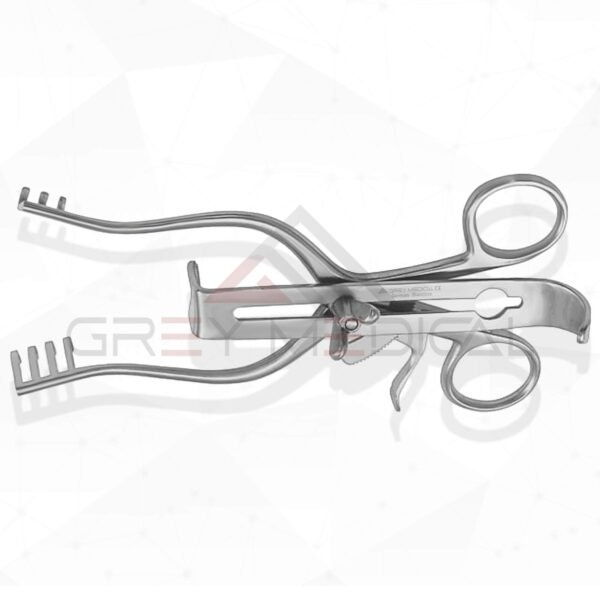
The Henley Retractor is a trusted tool in the operating room. Surgeons use it to hold back tissue and keep the surgical field open during procedures that need deep, stable exposure. As part of the broader family of surgical instruments, it plays an important role in helping teams work with greater precision, control, and speed.
This instrument stands out because it is self-retaining, which means it can stay in place without constant manual holding. That feature helps reduce hand fatigue, frees up assistants, and gives the surgeon a clearer view of the target anatomy. In procedures where visibility matters at every step, the Henley Retractor is a practical and reliable piece of medical equipment.
What Is a Henley Retractor?
A Henley Retractor is a self-retaining surgical retractor designed to hold incised tissue apart during surgery. Its main purpose is to improve access to the operative site while maintaining a stable working area. Unlike handheld retractors that need continuous support from a surgeon or assistant, the Henley Retractor stays open through its locking or ratcheting mechanism.
This henley retractor design makes it especially useful in surgeries that require consistent exposure over time. It is often used in procedures where deep structures must be accessed carefully and where a stable field helps reduce disruption and delay.
The instrument is usually made from high-grade surgical stainless steel, which gives it strength, corrosion resistance, and compatibility with repeated sterilization. These qualities are essential for durable medical equipment used in demanding clinical settings.
Why the Henley Retractor Matters in Surgery
Good exposure is one of the foundations of safe surgery. When tissue is held back in a stable and controlled way, the surgeon can identify structures more clearly and work with greater accuracy. This matters even more in specialties like orthopedics and spine surgery, where anatomy can be deep, dense, and difficult to access.
The Henley Retractor supports this need by helping create a consistent operative window. It reduces the need for repeated repositioning and allows the team to maintain focus on the procedure itself. In many cases, better exposure can improve workflow, support careful dissection, and help protect nearby tissue.
Among modern surgical instruments, retractors may seem simple at first glance. Yet they have a direct effect on how well a procedure proceeds. The Henley Retractor is a strong example of how thoughtful instrument design can support both surgical performance and patient care.
Key Features of the Henley Retractor
The Henley Retractor is known for several practical design features that make it useful across a range of procedures.
Self-Retaining Mechanism
One of the most important features of the Henley Retractor is its self-retaining function. Once the blades are positioned, the retractor can be opened and locked in place. This stable retraction helps maintain exposure without requiring continuous hand pressure.
This feature offers several advantages:
- ol]:!pt-0 [&>ol]:!pb-0 [&>ul]:!pt-0 [&>ul]:!pb-0″ value=”1″>Frees an assistant for other tasks
- ol]:!pt-0 [&>ol]:!pb-0 [&>ul]:!pt-0 [&>ul]:!pb-0″ value=”2″>Reduces hand fatigue during longer procedures
- ol]:!pt-0 [&>ol]:!pb-0 [&>ul]:!pt-0 [&>ul]:!pb-0″ value=”3″>Maintains a steady surgical field
- ol]:!pt-0 [&>ol]:!pb-0 [&>ul]:!pt-0 [&>ul]:!pb-0″ value=”4″>Supports smoother instrument handling
In busy operating rooms, efficiency matters. A self-retaining retractor can improve team coordination and reduce the number of manual adjustments needed during surgery.
Multiple Blade Configurations
Another strength of the Henley Retractor is its range of blade configurations. Different procedures call for different exposure needs. Some eye lid retractor areas require broader retraction, while others need more focused and delicate tissue separation.
Blade options may vary by:
- ol]:!pt-0 [&>ol]:!pb-0 [&>ul]:!pt-0 [&>ul]:!pb-0″ value=”1″>Width
- ol]:!pt-0 [&>ol]:!pb-0 [&>ul]:!pt-0 [&>ul]:!pb-0″ value=”2″>Depth
- ol]:!pt-0 [&>ol]:!pb-0 [&>ul]:!pt-0 [&>ul]:!pb-0″ value=”3″>Curvature
- ol]:!pt-0 [&>ol]:!pb-0 [&>ul]:!pt-0 [&>ul]:!pb-0″ value=”4″>Sharp or blunt profile
This variation allows surgeons to choose the setup that best matches the anatomy and the procedure. In this way, the Henley Retractor becomes a flexible piece of medical equipment rather than a one-size-fits-all tool.
Strong, Durable Construction
Because it is used in demanding surgical environments, the Henley Retractor is built for strength and repeat use. Stainless steel construction helps the instrument resist wear and maintain structural integrity over time. It also supports proper sterilization between cases, which is essential for patient safety.
Ergonomic Surgical Design
Although it is a rigid instrument, the Henley Retractor is designed with surgical workflow in mind. Its structure allows for secure placement and controlled retraction. A well-designed retractor helps the surgeon achieve exposure without placing unnecessary stress on surrounding tissue.
How the Henley Retractor Works
The working principle of the Henley Retractor is straightforward but effective. After the incision is made and the tissue layers are approached, the blades are placed into the wound. The instrument is then opened gradually to retract tissue and maintain the desired exposure. Once the correct position is reached, the locking mechanism secures the retractor in place.
Because the instrument holds itself open, the surgical team can focus on the next steps of the operation. This setup is especially useful when exposure must remain stable while instruments are passed, bone is addressed, or delicate structures are visualized.
Like many surgical instruments, success depends not only on design but also on proper selection and placement. Choosing the right blade size and applying careful tension are key to effective and safe use.
Applications in Orthopedic Surgery
The Henley Retractor is commonly used in orthopedic procedures because these surgeries often involve deep operative sites and firm tissue planes. Clear exposure is critical when working around bone, joints, and supporting structures.
Joint and Bone Procedures
In orthopedic surgery, the Henley Retractor may help maintain access during procedures involving:
- ol]:!pt-0 [&>ol]:!pb-0 [&>ul]:!pt-0 [&>ul]:!pb-0″ value=”1″>Long bones
- ol]:!pt-0 [&>ol]:!pb-0 [&>ul]:!pt-0 [&>ul]:!pb-0″ value=”2″>Joint reconstructions
- ol]:!pt-0 [&>ol]:!pb-0 [&>ul]:!pt-0 [&>ul]:!pb-0″ value=”3″>Fracture fixation
- ol]:!pt-0 [&>ol]:!pb-0 [&>ul]:!pt-0 [&>ul]:!pb-0″ value=”4″>Soft tissue exposure around musculoskeletal structures
Its self-retaining design can improve access to the surgical site while reducing the need for constant manual retraction. This may help the surgical team maintain efficiency, especially in cases that require prolonged exposure.
Improved Access in Deep Surgical Fields
Orthopedic operations can involve layers of muscle, fascia, and connective tissue that must be moved aside carefully. The Henley Retractor helps create a stable window into these deeper structures. Better visualization can support accurate implant placement, controlled dissection, and safer handling of nearby anatomy.
Applications in Spinal Surgery
Spinal procedures demand precision. The anatomy is compact, sensitive, and often difficult to access. For this reason, reliable retraction is essential. The Henley Retractor can be valuable in spinal surgery when surgeons need controlled tissue separation and consistent exposure.
Exposure of the Spine
During spinal surgery, the surgeon may need access to vertebral elements, posterior structures, or surrounding tissue planes. A self-retaining retractor can help maintain this exposure while the team works carefully around critical anatomy.
Support for Delicate Technique
Spinal operations often require a steady field with minimal unnecessary movement. The Henley Retractor helps reduce the need for repeated manual repositioning. This stable setup can support focus and precision, both of which are essential when working near neural structures.
Workflow Benefits in Complex Cases
Some spinal surgeries take significant time and involve multiple procedural steps. In these cases, a reliable retractor improves workflow by helping preserve exposure throughout the operation. This makes the Henley Retractor a practical part of the medical equipment used in advanced spine care.
Benefits of Using the Henley Retractor
The popularity of the Henley Retractor comes from the clear benefits it offers in the operating room.
Improved Visualization
One of the biggest advantages is better visibility. By holding tissue apart in a steady way, the instrument helps surgeons see the operative field more clearly. Better visualization supports more accurate dissection and more confident decision-making during the procedure.
Greater Surgical Efficiency
A self-retaining retractor reduces the need for constant adjustment and manual support. This can make the procedure more efficient and allow assistants to focus on other important tasks. In a well-coordinated operating room, even small gains in efficiency can have a meaningful effect.
Reduced Assistant Fatigue
Handheld retraction can be tiring, especially during longer cases. A self-retaining option helps reduce the physical burden on assistants and promotes a more sustainable workflow.
Consistent Tissue Retraction
Stable retraction matters in surgery. The Henley Retractor offers reliable tissue separation over time, which helps maintain the field and reduces interruptions.
Versatility Across Procedures
Thanks to different blade options and durable construction, the Henley Retractor can be adapted for various surgical needs. This makes it a useful addition to a wide range of surgical instruments in hospitals and surgical centers.
Considerations for Proper Use
Like all medical equipment, the Henley Retractor should be used with care and sound surgical judgment. Proper blade selection is important, as the wrong size or shape may limit exposure or place too much pressure on tissue. The instrument should also be positioned thoughtfully to achieve adequate retraction without causing unnecessary trauma.
Routine inspection is also essential. Surgical teams should check the locking mechanism, blade condition, and overall integrity before use. As with all reusable surgical instruments, proper cleaning and sterilization are necessary to maintain performance and safety.
The Role of the Henley Retractor in Modern Surgical Practice
The Henley Retractor remains relevant because it solves a basic but critical surgical need: dependable exposure. While many parts of surgery continue to evolve through imaging, navigation, and minimally invasive techniques, core instruments still shape the success of daily procedures. Retractors are among those essential tools.
In orthopedic and spinal surgery, where precision and visibility are closely linked, the Henley Retractor continues to serve as a reliable aid. Its self-retaining design, blade versatility, and durable build make it a practical choice for surgeons who need stable access to deep operative fields.
Conclusion
The Henley Retractor is more than a simple retraction device. It is an important piece of medical equipment that supports exposure, efficiency, and control during surgery. With its self-retaining mechanism and multiple blade configurations, it offers clear advantages in procedures that require dependable tissue retraction.
Its role in orthopedic and spinal surgery highlights its value among modern surgical instruments. By improving visualization and helping maintain a stable surgical field, the Henley Retractor contributes to smoother workflow and more precise operative technique.
For medical professionals and students, understanding this instrument is part of understanding how thoughtful tool design supports better surgery. In modern practice, the Henley Retractor remains a strong example of how essential instruments continue to improve the surgical environment.

