
A trip to the dentist for a tooth extraction can be an anxious experience for many. However, understanding the process and the tools involved can help demystify the procedure and build confidence in your dental professional. The success of an extraction relies heavily on the dentist’s skill and the quality of the tools they use. This article will explore the essential tooth extraction instruments that are fundamental to modern dentistry.
The Foundation of a Successful Extraction
Before an extraction begins, a thorough examination is necessary. Dentists use diagnostic instruments like mirrors and probes to assess the tooth’s condition and position. Once the decision to extract is made, the right set of tools is selected. These are not just simple pliers; they are precision-engineered devices designed for specific tasks, ensuring the procedure is as smooth and painless as possible.
The quality of these instruments is paramount. Companies like GreyMedical®, a privately owned medical technology company, are dedicated to innovation and excellence in the craft of surgical instruments. Their commitment ensures that dental professionals have access to reliable, high-quality tools that enhance patient safety and procedural efficiency.
Key Instruments in the Extraction Process
The toolkit for a tooth extraction is varied, with each instrument playing a specific role. From loosening the tooth to removing it from the socket, the process is a sequence of carefully executed steps. Let’s look at the primary tools involved.
Dental Elevators: The Initial Step
Before a tooth can be extracted, it must first be loosened from the periodontal ligament that holds it in the socket. This is the job of the dental elevator. Elevators are inserted between the tooth and the surrounding bone, acting as a lever to gently expand the socket and separate the tooth from its ligament.
There are many types of elevators, each designed for different teeth and situations. For example, a straight elevator is one of the most common types, used for a wide range of teeth. Other variations, like the Cryer or triangular elevator, are designed for removing broken roots that may remain after the crown of the tooth is gone. The precise use of these elevators minimizes trauma to the surrounding tissues.
Forceps: The Tool for Removal
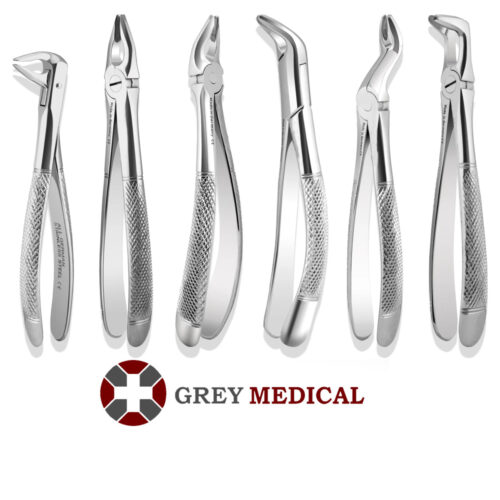
Once the tooth is sufficiently loosened, forceps are used for the final removal. Dental forceps might look intimidating, but they are designed to grip the tooth firmly without crushing it. Each pair of forceps is specifically shaped to fit the contours of a particular tooth in a specific location in the mouth.
For example, the forceps used for an upper molar are different from those used for a lower incisor. The beaks of the forceps are designed to grasp the root of the tooth under the gum line, allowing the dentist to use controlled movements—rocking and rotating—to finally remove the tooth from the socket. The design of these crucial tooth extraction instruments allows for a firm grip and controlled force.
Specialized Tools for Complex Cases
Not all extractions are straightforward. Impacted wisdom teeth or teeth that have broken below the gum line require a more surgical approach. In these cases, the dentist or oral surgeon will use an expanded set of surgical tooth extraction instruments.
Surgical Burs and Drills
For impacted teeth, the surgeon may need to remove a small amount of bone to access the tooth. High-speed surgical burs and drills are used for this task. These instruments are designed to cut bone efficiently and with minimal heat generation to protect the surrounding tissues.
Root Tip Picks and Curettes
After a tooth is extracted, especially if it was fractured, small fragments of the root or infected tissue may be left behind in the socket. Root tip picks are delicate instruments used to retrieve these small pieces. Following this, a surgical curette is used to scrape the socket walls, removing any pathological tissue and ensuring the site is clean to promote proper healing. This step is vital for preventing post-operative infections. The complete set of tooth extraction instruments ensures a dentist is prepared for any complication.
The Importance of Quality and maintenance
The effectiveness and safety of a tooth extraction are directly linked to the quality of the instruments used. High-grade stainless steel, ergonomic design, and precision manufacturing are hallmarks of superior dental tools. Quality instruments retain their sharpness, provide better tactile feedback to the dentist, and are more resistant to corrosion and wear.
Proper sterilization and maintenance are also critical. After each use, instruments go through a rigorous cleaning and sterilization process to prevent cross-contamination and ensure patient safety. This highlights why dental practices invest in durable, well-made tools from trusted manufacturers.
Conclusion: The Role of Precision in Dental Care
The array of tooth extraction instruments is a testament to the precision and care involved in modern dentistry. From elevators and forceps to specialized surgical tools, each instrument is designed with a specific purpose to make the procedure as safe, efficient, and comfortable as possible. The expertise of the dental professional, combined with high-quality instruments from innovative companies like GreyMedical®, ensures that patients receive the best possible care. Understanding these tools and their functions can help alleviate patient anxiety and build trust in the dental process, turning a potentially daunting experience into a routine procedure with a predictable, positive outcome.

