
Choosing the right surgical instrument is critical for precision and patient safety in any operating room. While many hemostats look similar at a glance, subtle differences in design dictate their specific uses. A common point of confusion for medical students and surgical techs alike is the distinction between two popular clamps. Today, we are breaking down the kelly vs crile forceps comparison to help clarify when to reach for which tool.
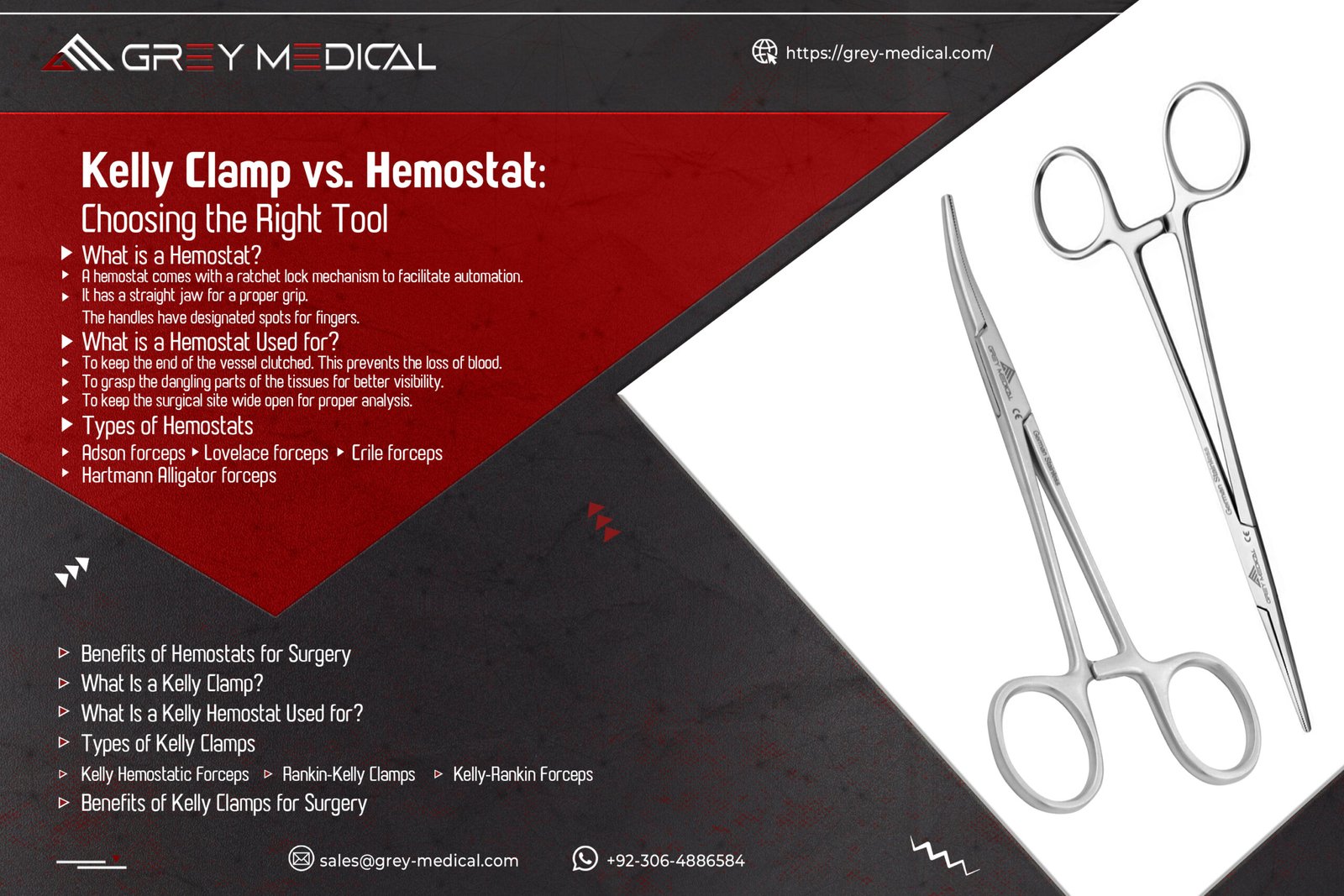
Visual Identification and Design
The primary difference lies in the serrations on the jaws of the instruments. When examining kelly vs crile forceps, you need to look closely at the inner surface of the clamp.
A Crile hemostat features transverse serrations that extend along the entire length of the jaw. This full-length texture provides a consistent grip from the tip to the box lock. In contrast, the Kelly hemostat only has serrations on the distal half of the jaws, meaning the back half near the hinge is smooth. This design variation might seem minor, but it significantly impacts how the instrument interacts with tissue.
Functional Applications in Surgery
Understanding the structural differences helps explain the functional divide in the kelly vs crile forceps debate. Because the Crile forceps have serrations along the entire jaw, they are generally used for clamping larger blood vessels or grasping tissue that requires a secure hold along a broader surface area. The full grip ensures that the vessel does not slip, making it a staple for general occlusion.
On the other hand, the Kelly forceps are often preferred for more delicate tasks. Since the serrations only cover half the jaw, the smooth portion allows the surgeon to clamp a vessel while leaving the proximal tissue uncrushed. This makes the Kelly an excellent choice for clamping medium-sized vessels or small arteries where precision at the tip is paramount, but kindness to surrounding tissue is also necessary.
Sizing and Material Quality
Both instruments typically come in similar sizes, often ranging from 5.5 inches to larger variations, and are available in both curved and straight profiles. Regardless of whether you choose a curved or straight profile, the quality of the steel matters. High-quality stainless steel ensures the serrations remain sharp and the box lock mechanism functions smoothly over time.
At GreyMedical®, we understand that the craft of surgical instruments requires uncompromising standards. As a privately owned medical technology company dedicated to innovation and excellence, GreyMedical® ensures that every hemostat, whether Kelly or Crile, meets rigorous performance criteria.
Conclusion
Mastering the nuances of surgical instrumentation is a journey of attention to detail. The kelly vs crile forceps distinction is a classic example of how small design choices—like half-serrations versus full serrations—can alter the function of a tool. Remember: Crile for the full grip, Kelly for the distal grip.
When selecting your instruments, rely on trusted manufacturers who prioritize precision. GreyMedical® remains committed to supporting surgical teams with top-tier tools that enhance procedural outcomes. By understanding the kelly vs crile forceps comparison, you can ensure you always have the right instrument in hand for the task.

