
The global construction industry is currently navigating a period of unprecedented technological evolution. As urban landscapes grow more complex and project timelines become increasingly tighter, traditional methods of site monitoring and surveying are being challenged by more efficient, data-driven alternatives. At the heart of this digital transformation is the construction site drone.
No longer considered a futuristic novelty or a hobbyist’s gadget, the construction site drone has matured into a fundamental asset for project managers, civil engineers, and developers who demand real-time accuracy and enhanced safety. By providing a high-altitude perspective coupled with high-resolution imagery, a construction site drone bridges the gap between the theoretical blueprint and the physical reality of a modern build.

The Strategic Integration of the construction drone
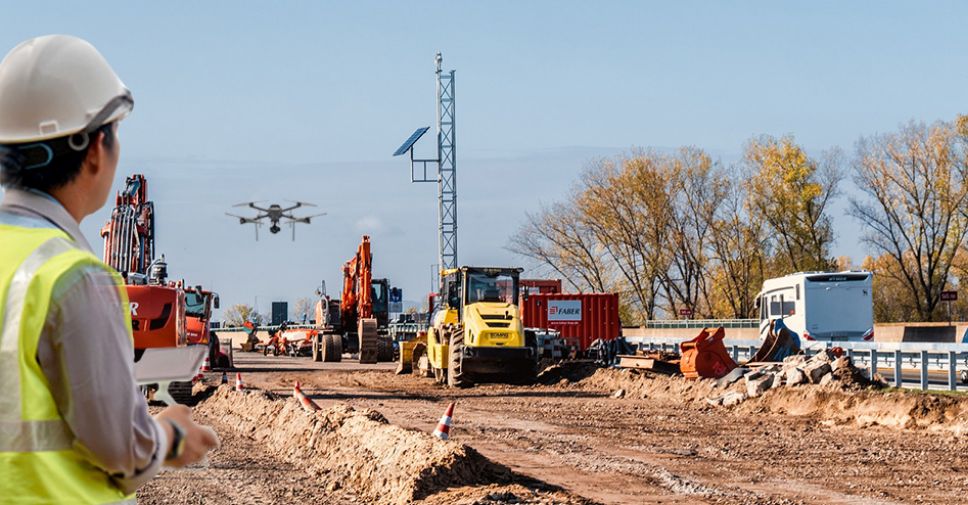
When observing the lifecycle of a large-scale project,whether it is a high-rise residential complex, a sprawling highway, or a complex industrial facility,the role of a construction drone is multifaceted and deeply integrated into daily operations. From the initial topographic survey to the final client handover, the construction site drone offers a continuous stream of visual and spatial data that was previously impossible to obtain at such speed.
Historically, surveying a massive site required days of manual labor, involving specialized teams walking through potentially hazardous terrain with heavy total stations and prisms. Today, a construction drone can cover that same area in a fraction of the time, capturing millions of data points with centimeter-level precision. This efficiency does not just save labor hours; it fundamentally alters the financial management of the project.
By deploying a construction site drone, companies can perform regular overflights to create highly accurate 2D orthomosaic maps and 3D digital twins. These models allow project leads to overlay original CAD (Computer-Aided Design) drawings directly onto the current status of the site.
This process quickly reveals any discrepancies, ensuring that the construction drone acts as an early warning system for potential engineering errors. Detecting a foundation misalignment or a structural deviation early via a construction site drone can save a firm millions of dollars in rework costs and prevent the domino effect of schedule delays that typically plague the industry.
Enhancing Safety Protocols with Aerial Intelligence
Safety remains the highest priority on any job site, and the construction site drone is a literal lifesaver in high-risk environments. Construction sites are inherently dangerous, characterized by heavy machinery, vertical scaffolding, and unstable ground conditions.
By using a construction site drone for routine inspections, firms can significantly reduce the need for workers to put themselves in “at-risk” positions. For example, instead of sending a technician up a crane or onto a high-pitched roof for a visual check, a construction drone equipped with high-zoom cameras can provide a detailed view of every bolt and weld from a safe distance.
Furthermore, a construction site drone can be used for ongoing site security and hazard identification. Thermal sensors on a specialized construction drone can detect electrical hotspots, overheating machinery, or gas leaks that are completely invisible to the human eye.
This proactive approach to safety, powered by the construction site drone, creates a culture of “Safety First” that is backed by empirical data rather than just manual checklists. In 2026, any major firm that does not utilize a construction drone for risk mitigation is essentially falling behind established industry best practices and global safety standards.
Volumetric Analysis and Material Management
One of the most tedious and error-prone tasks on a construction site is managing stockpiles of raw materials like gravel, sand, and soil. Traditional manual estimation is notoriously inaccurate and incredibly time-consuming, often leading to disputes with suppliers or project stalls due to inventory shortages. However, a construction site drone utilizes photogrammetry to provide rapid, precise volumetric calculations.
By flying a construction drone over a stockpile in a pre-programmed grid, specialized software can calculate the exact volume based on the 3D mesh generated. This level of precision from a construction site drone ensures that logistics teams know exactly when to order more supplies, minimizing waste and optimizing the supply chain.
Moreover, the construction site drone assists in environmental compliance and sustainability efforts. By monitoring runoff, vegetation health, and soil erosion through aerial imagery, the construction drone helps firms adhere to strict environmental regulations. This comprehensive oversight provided by the construction site drone ensures that the project remains within legal frameworks, avoiding heavy fines and legal delays that can stall a project for months.
Transparency and Stakeholder Communication
Modern construction is a collaborative effort involving various stakeholders, including architects, investors, and government regulatory bodies. Keeping everyone on the same page is often the biggest administrative challenge. A construction site drone serves as a “single source of truth” for all parties involved. High-definition videos and photos captured by a construction drone provide an undeniable record of project progress. Instead of reading through dense, subjective text reports, stakeholders can view a time-lapse created by a construction site drone to see the project’s physical evolution over months.
This transparency builds immense trust. When an investor can see the real-time progress of their capital through construction site drone footage, it fosters a stronger, more confident partnership. For public sector projects, construction drone data can be shared with the community and government bodies to demonstrate progress and justify the use of funds. The construction site drone essentially turns a chaotic building site into an organized, transparent, and data-rich environment that is easier to manage from the boardroom.
Conclusion
The integration of the construction site drone is no longer an optional luxury,it is a competitive necessity. From reducing site hazards and increasing human safety to providing pinpoint accuracy in surveying and volumetric measurement, the construction drone is the ultimate force multiplier for the modern builder. As infrastructure needs continue to grow globally, the construction site drone will remain a pivotal tool in creating smarter, safer, and more efficient urban environments.
CTA: Industry leaders can significantly elevate their project’s operational efficiency and safety by integrating the advanced construction site drone and monitoring systems provided by Asteria Aerospace.

