
If you are planning a trip to the vast, culturally rich landscape of the Democratic Republic of the Congo (DRC), one of your first tasks is to figure out your visa. In this guide, I’ll walk you through everything you need to know how to apply for the Democratic Republic of the Congo Visa? — what types are there, what documents you need, how long it takes, and how to avoid common pitfalls. By the time you finish reading, you’ll feel more prepared and confident to apply.
Why do I need an e‑visa to visit the DRC?
The DRC now offers an electronic visa (e‑visa) option to simplify travel for foreigners — rather than forcing every visitor to go through a traditional application process. This e‑visa is ideal for tourists, business travellers, or anyone passing through, because it allows you to apply online, submit your documents digitally, and (if approved) receive your approval by email.
For many travellers, this means less hassle, more convenience, and a smoother journey from home to Congo.

What types of visa are there for the DRC?
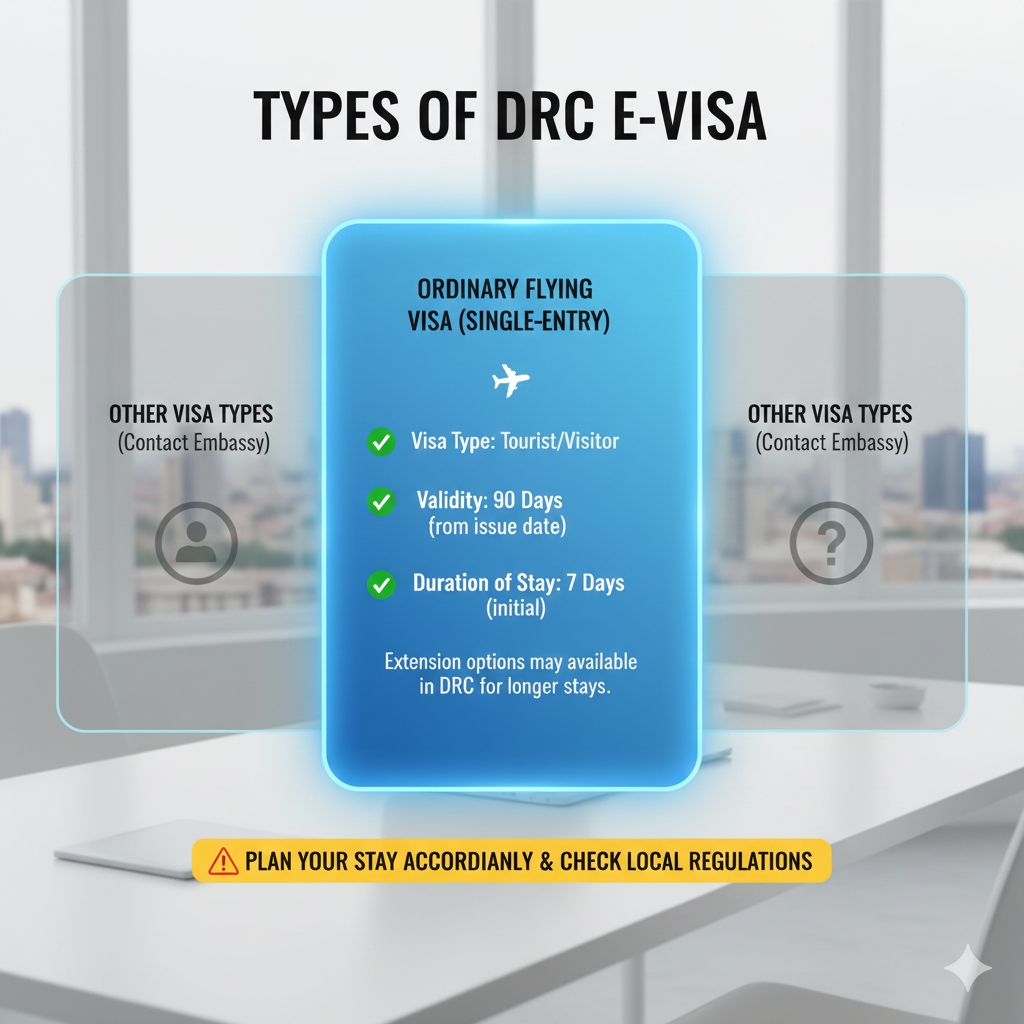
For many travellers, the most relevant is the standard tourist/visitor e‑visa — sometimes called “ordinary flying visa.” For example:
-
Visa type: Ordinary flying visa (single‑entry)
-
Validity: 90 days (from date of issue)
-
Duration of stay: 7 days (initial) once you enter DRC
That means after you get your e‑visa stamp/approval, you must plan your stay accordingly (initially up to 7 days). If you need more time, there may be extension options once inside the DRC.
How can I apply for a DRC e‑visa online?
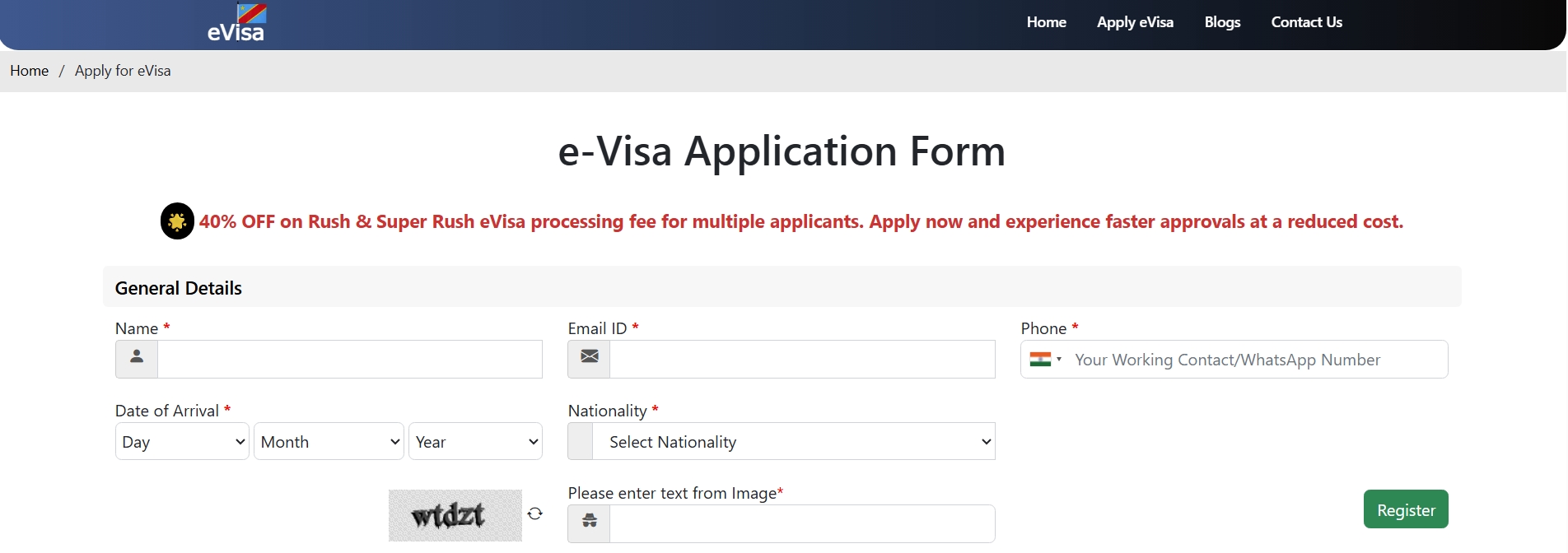
Here’s a step-by-step guide to apply for Democratic Republic of the Congo Visa:
-
Fill in your details. Enter personal info, passport info, travel dates, purpose of travel, etc.
-
Upload required documents. This includes a scan/photo of your passport bio‑page, a recent passport‑style photograph.
-
Choose processing speed. You can go for standard processing, or pick expedited options (rush / super‑rush) if you need the visa faster.
-
Make payment electronically. The Congo visa fee is typically via a credit/debit card (or other accepted methods).
-
Wait for approval email. Once approved, you receive your e‑visa by email. Print or download that document, and carry it with your passport when traveling.
That’s it — from application to approval, it’s largely digital.
What documents are required for a DRC e‑Visa application?
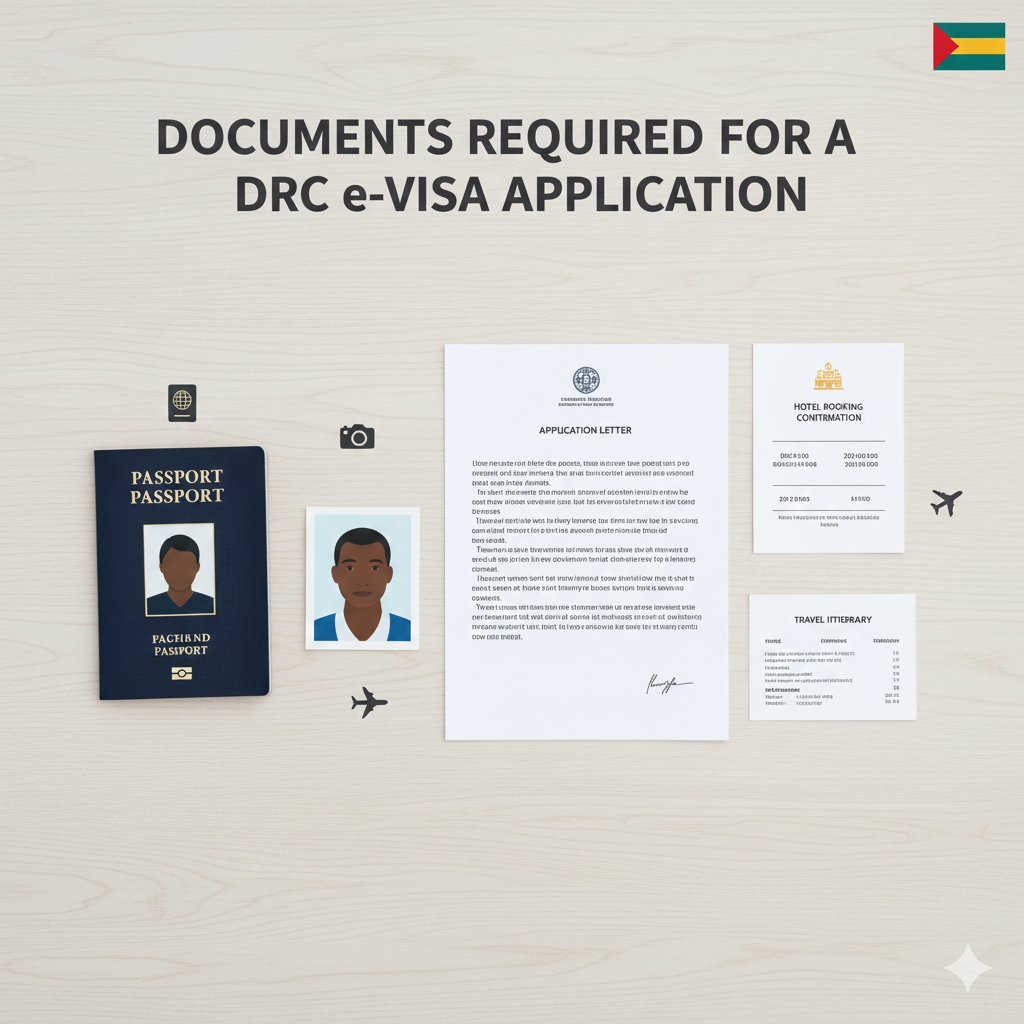
Before you start, make sure you have:
-
Passport bio‑page (valid, ideally with at least 6 months validity)
-
A recent passport‑style photograph (color, plain background, clear quality)
-
Application letter — a short letter stating your intent to visit, travel dates, and purpose of visit (especially if required by the application)
If applicable, proof of accommodation or travel itinerary might also help — though the required document for Congo Visa seems to vary depending on where you apply.
How much does a Democratic Republic of the Congo e‑Visa cost?
One should be aware of the Democratic Republic of the Congo e-Visa fee prior to application. The every cost is usually segmented into two, particularly when you seek the services of a visa agency to make the process easy. The following are the contents of those fees:
-
Visa Cost: This is the fee, which is not refunded, and is directly paid to the Democratic Republic of the Congo Authority to process and issue your e- Visa.
-
Service Fee: This is a fee added by the visa agency or web site that you utilize. Professional services that it addresses include application review of details, verification of documents, secure payment processing and customer support during your application.
Who can help if your DRC e‑Visa application is rejected?
Sometimes, despite careful application, things don’t go smoothly. What you can do if rejected:
-
Review the rejection reason (if provided) carefully — maybe a document was missing or photos didn’t meet requirements.
-
Correct and re‑submit the application (with corrected/complete documents) — many platforms allow a second attempt.
-
Contact support of the platform used for guidance or clarification.
-
As a backup (if time allows), consider applying via a archive process instead of the e‑visa route — though that may take longer.
Because requirements can change, always verify the latest information before re‑applying.

What is the validity period of a DRC e‑Visa?
For the standard e‑visa:
-
The visa is valid for 90 days from the date of issue, giving you a window to travel.
-
Upon entry, you are initially allowed a stay duration of 7 days.
If you plan to stay longer than a week, you may need to look into options to extend once you are inside DRC.
How do you handle urgent DRC e‑Visa applications?
If you are travelling on short notice, the e‑visa option offers faster processing tiers:
-
Standard processing — around 11 to 13 working days.
-
Rush processing — typically 8 to 11 working days.
-
Super Rush (urgent) processing — can take 5 to 8 working days.
Remember — expedited processing usually means extra charges. Also, rushing the application increases the importance of getting all documents right (passport scan, photo, application letter, etc.), because any mistake can lead to a rejection.

When is the best time to apply for a DRC e‑Visa?
Given the varying processing times, a safe approach: submit your application at least 3–4 weeks before your planned travel date. This ensures enough buffer time — even if there are delays or if your first attempt needs correction.
If you have an urgent trip, choose Rush or Super Rush, but only if your documents are ready and error‑free.
What happens if your DRC e‑Visa is denied?
If denied, the outcome depends on the reason: maybe your passport scan was blurry, photo didn’t meet criteria, application letter missing, or other document issues. In such cases:
-
Review what went wrong carefully, correct or improve the documents, and re‑apply.
-
Allow extra time — slower processing or repeated applications may take weeks.
-
Check whether the platform offers support or appeal pathways.
Unfortunately, like other countries, a denial may mean you cannot travel — so having a backup plan is wise.

Which method reduces the chance of application rejection—agent or government website?
What the “Agent” site (congo‑evisa.com) claims — its advertised advantages
According to its own home page and promotional text, agent website offers the following for applying for a visa to the Democratic Republic of the Congo (DRC):
-
Convenience: You can complete the application online from anywhere.
-
Speed / Efficiency: They say eVisa decisions are typically made “within five business days.”
-
Simplicity / User‑friendliness: The process is described as easier and more straightforward than traditional visa application (no complex paperwork, guided steps).
-
Electronic Delivery: Once approved, the eVisa is emailed directly — no courier, no waiting.
-
Cost‑effective / No Hidden Fees: They claim transparent pricing and no unnecessary “middleman” fees.
-
Customer Support / Guidance: They highlight that they give “clear instructions” and help applicants reduce chances of mistakes (thus presumably reducing rejection risk).
If everything works as claimed — good support, properly filled forms, correct documents — then yes: a service like this might help avoid mistakes (which are often a major cause of rejection).

Using the Government Visa Website
-
Less User-Friendly / Complicated Forms
-
Government sites often have complex forms, terminology, and strict formatting rules.
-
Mistakes (even small typos) can lead to delays or rejection.
-
-
No Personalized Guidance
-
There’s usually no step-by-step support for filling the form.
-
If you’re unsure about which documents to submit or how to answer certain questions, you have to figure it out yourself.
-
-
Slower Processing / No Priority Service
-
Government portals may have standard processing times with little flexibility.
-
Some agent sites claim faster “expedited” processing, though this isn’t guaranteed.
-
-
Limited Customer Support
-
Support is often restricted to email or generic FAQ sections.
-
If something goes wrong, it can take longer to resolve.
-
-
Less Convenient Payment Options
-
Some government sites only accept certain credit cards or online payment methods.
-
Agents often accept multiple payment options and provide a single, all-in-one service.
-
-
No Document Check
-
Governments don’t review your documents for mistakes before submission.
-
Agents often claim they check everything first to reduce rejection risk.
-
How do you renew or extend a DRC e‑Visa?
For travellers who need to stay longer than the initial 7 days: according to the e‑visa provider’s info, it’s possible to request an extension once you’re in the DRC. The initial authorization is just the “entry visa” — after that you may approach local authorities (or the relevant offices) for extension.
However, details may vary, and it’s important to check local rules with a guide/sponsor in DRC ahead of time, so you don’t overstay unintentionally.

What are the health requirements for a DRC e‑Visa?
While basic passport + photo + application letter are standard, many travellers to the DRC are advised to carry a yellow fever vaccination certificate. Several sources suggest that this is often checked upon arrival.
Because health regulations can change, it’s wise to check current requirements shortly before departure — for example, if other vaccinations or health declarations are needed.
Which common mistakes to avoid when applying for a Congo e‑Visa?
From travel‑blogger tips and what many travellers report — avoid these mistakes:
-
Uploading a blurry or low-resolution photo or passport scan — poor quality may cause rejection.
-
Using a passport that is near expiry (passport should ideally have at least 6 months validity).
-
Forgetting or incorrectly writing the application letter (if required).
-
Waiting until the last minute — leaving no buffer if visa is delayed or rejected.
-
Missing health/ vaccine requirements (e.g. yellow fever certificate).
-
Traveling with incomplete documents — always carry printed e‑visa approval + passport + vaccination proof + itinerary.

What travel tips should you know before applying for a DRC e‑Visa?
-
Apply early — give yourself room for delays or unexpected issues.
-
Always double-check passport validity, photo specs, name spelling, travel dates.
-
Make digital and physical copies of all your documents (passport bio‑page, approval letter, vaccination certificate, itinerary, accommodation proof).
-
If travelling with children, start gathering documents well in advance (birth certificate, parental consent if needed).
-
Consider travel insurance and check health requirements (vaccinations, immunizations, etc.).
-
Once approved, print the approval letter and carry it safely; present it at when you arrive at DRC.
Conclusion: Your Hassle‑Free Journey to the Congo e‑Visa
Travelling to the Democratic Republic of the Congo is a dream for many adventurers — and applying for your visa doesn’t have to be a headache. If you follow this guide, gather your documents carefully, and apply with enough time, you can make your visa process smooth and stress‑free. From filling out the form to receiving your e‑visa approval, and finally stepping foot in the DRC — each step gets you closer to discovering a unique land full of diversity, history and natural beauty.
With a little planning and care, you can get your e‑visa efficiently and focus on the exciting part: your journey to Congo. Bon voyage!
Frequently Asked Questions (FAQs) about the Congo e‑Visa
Q: Is the e‑visa valid for more than one entry?
A: The standard ordinary visa is single‑entry. Initial stay after arrival is up to 7 days.
Q: Can I extend my stay beyond 7 days?
A: Yes — there is an option to request an extension once inside DRC.
Q: How long before travel should I apply?
A: Ideally 3 to 4 weeks before your planned departure — to account for processing time or any hiccups.
Q: What if I need to travel urgently?
A: Use the Rush or Super Rush processing option, but make sure all your documents are ready and accurate.
Q: Do I need vaccinations?
A: Yes — you should at least have a yellow fever vaccination certificate. Other vaccines or health requirements may apply depending on travel conditions, so check before travel.

