
Introduction
A shift is happening in how buildings think about security. Instead of relying only on cameras, alarms, and fixed wiring, modern facilities are moving toward connected systems that quietly monitor everything in real time. A LoRaWAN Door Sensor sits right at the center of this change.
It turns something as simple as a door opening or closing into actionable digital information that can be used for security, operations, and automation. When paired with scalable solutions available through IoTShop South Africa, it becomes part of a much larger smart infrastructure designed for modern environments.
What a LoRaWAN Door Sensor Really does in Everyday Environments
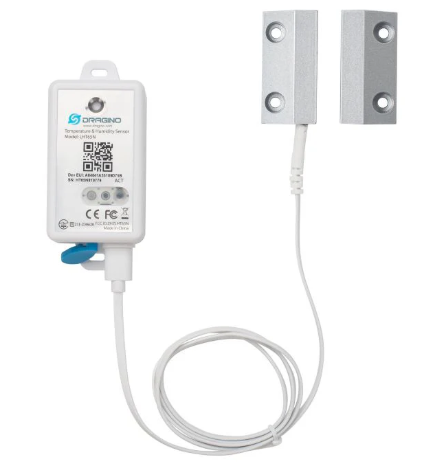
A LoRaWAN Door Sensor is a small but powerful device that detects whether a door is open or closed and transmits that status over a long-range, low-power network. Instead of relying on Wi-Fi or wired systems, it uses LoRaWAN technology, which is designed specifically for wide-area IoT communication.
At a basic level, it works using a magnetic contact mechanism. When the door state changes, the sensor triggers and sends a signal through a nearby gateway. That gateway then forwards the data to a cloud platform or local server where it can be monitored in real time.
To understand the communication layer behind it, LoRaWAN is a globally recognized protocol managed by the LoRa Alliance, designed for low-power devices that need long-range connectivity without heavy data usage. This makes the system especially useful in places where traditional connectivity is either expensive or unreliable.
How LoRaWAN Technology Connects Everything Together
The real strength of this system isn’t just the sensor itself—it’s the network it operates on. LoRaWAN works on sub-GHz frequencies, allowing signals to travel long distances and pass through walls, floors, and industrial structures without needing dense infrastructure.
A typical setup involves three layers:
- The sensor captures door activity
- A gateway collects the signal
- A network server processes and displays the information
Once the data reaches the dashboard, it can be used for alerts, automation, or analytics. For example, if a restricted door opens outside of business hours, the system can instantly send a notification to security teams. This type of architecture is widely used in IoT sensors networks and smart infrastructure systems across industries.
Why Businesses are Shifting toward Wireless Security Systems
Traditional security setups often rely on wired infrastructure, which can be expensive, time-consuming to install, and difficult to scale. A wireless approach changes that entirely. A LoRaWAN Door Sensor removes the need for cabling, making installation faster and less invasive. That is especially useful for older buildings where rewiring is not practical.
Another major advantage is energy efficiency. These devices are designed to run for years on small batteries, reducing maintenance requirements significantly. In large-scale environments like warehouses or office complexes, this translates into lower operational overhead and fewer disruptions.
Wireless systems also improve visibility. Instead of relying on manual checks or periodic reports, managers can access real-time data from any location. That level of awareness is becoming essential in modern smart buildings, where decisions depend on live information rather than delayed reporting.
Real-world Applications Across Different Industries
The use cases for LoRaWAN Door Sensor deployments are expanding quickly because they solve a simple but important problem: knowing what is happening at every entry point without manual supervision.
In commercial offices, they help monitor access points and improve security oversight. In warehouses, they ensure restricted areas remain protected while also tracking movement patterns. In logistics environments, they support operational flow by confirming when storage areas or loading zones are accessed.
Educational campuses use them to monitor restricted rooms or improve safety protocols. Even remote facilities such as utility stations or agricultural storage units benefit from their long-range capability, especially where connectivity options are limited. The same underlying principle applies everywhere—real-time visibility without complex infrastructure.
Integration with IoT ecosystems like IoTShop
A sensor on its own is useful, but its real value appears when it becomes part of a larger ecosystem. Platforms like IoTShop South Africa focus on building connected environments where multiple devices work together. A LoRaWAN Door Sensor can be combined with environmental monitors, asset trackers, or energy management systems to create a unified view of an entire facility.
Instead of switching between different tools, everything is visible from a single dashboard. This kind of integration is what turns simple monitoring into intelligent decision-making. For example, a facility manager could correlate door activity with temperature changes or movement patterns to better understand building usage.
IoTShop’s approach reflects a broader industry trend where systems are no longer isolated—they are part of a connected network that communicates continuously.
Installation and Setup in Real Environments
Installing a LoRaWAN Door Sensor is generally straightforward, but planning still matters. Placement is important because the sensor needs to accurately detect door movement without interference.
Once installed, the next step is gateway configuration. These gateways act as communication bridges between sensors and the network server. In larger facilities, multiple gateways may be needed to ensure full coverage and avoid blind spots.
After that comes system integration. Most modern platforms support API connections or direct dashboard integration, allowing real-time data to flow into monitoring systems.
Once deployed, the system operates with minimal maintenance. Occasional battery replacement and software updates are usually enough to keep everything running smoothly.
FAQs
What is a LoRaWAN Door Sensor used for?
It is used to detect door openings and closings and send that information through a LoRaWAN network for monitoring, security, and automation.
Does it require internet or Wi-Fi?
No. It uses LoRaWAN technology, which operates independently of traditional Wi-Fi networks and is designed for long-range communication.
How long does the battery last?
Depending on usage frequency, many sensors can operate for several years due to their low-power design.
Can it work in large buildings?
Yes. LoRaWAN is specifically designed for long-range coverage, making it suitable for large facilities, campuses, and industrial sites.
Is it part of a larger IoT system?
Yes. It is commonly deployed as part of IoT sensors ecosystems where multiple devices connect through gateways and centralized platforms.
Final Thoughts
A LoRaWAN Door Sensor is not just about detecting movement—it’s about building awareness into the physical spaces we use every day. It quietly reports changes, integrates into wider systems, and supports smarter decision-making without requiring complex infrastructure.
When combined with scalable IoT solutions available through IoTShop, it becomes part of a connected environment where security, automation, and efficiency all work together. That’s where modern buildings are heading—not toward isolated systems, but toward networks that understand what’s happening in real time and respond intelligently without delay.

