
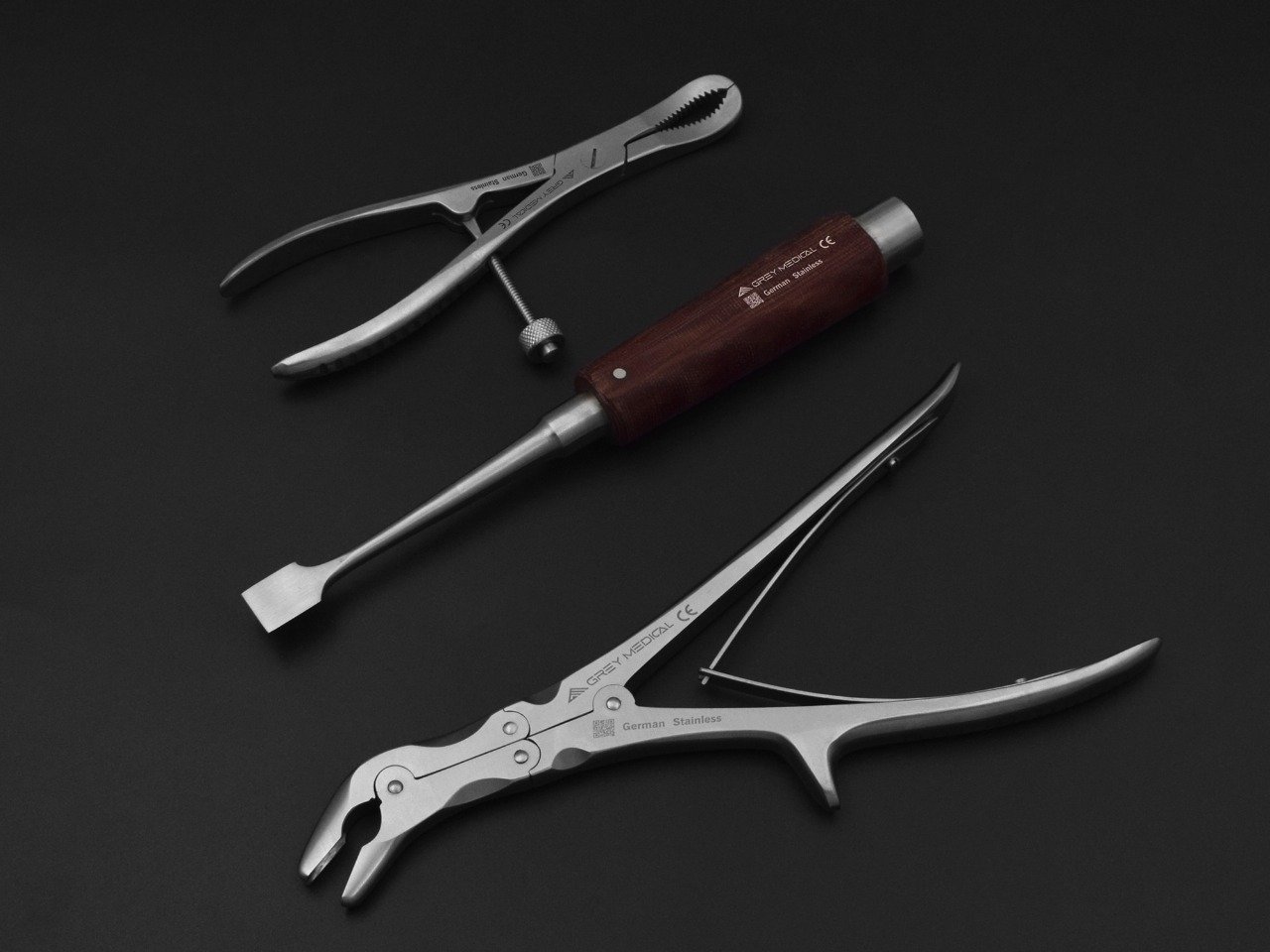
Orthopedic surgery depends on precision. When a surgeon repairs a fractured bone, replaces a worn joint, or stabilises the spine, every movement matters. Behind that work is a carefully designed set of orthopedic tools built to cut, hold, drill, retract, align, and fix tissue and bone with accuracy.
The quality of these instruments has a direct effect on patient outcomes. Reliable tools can support cleaner cuts, better implant placement, shorter operating times, and safer procedures. Poorly designed or worn instruments, by contrast, may increase risk, reduce efficiency, and make technically demanding surgery even harder. That is why orthopedic surgical instruments sit at the heart of the link between engineering and medicine.
The Evolution of Orthopedic Surgical Instruments
Orthopedic surgery has changed dramatically over the past century. Early procedures relied on basic hand tools that often lacked standardisation. As surgical techniques advanced, orthopedic surgical instruments makers began to create specialised devices for bone work, joint reconstruction, trauma fixation, and minimally invasive procedures.
Modern orthopedic surgical instruments reflect progress in several key areas:
Better materials
Stainless steel remains a core material because it offers strength, corrosion resistance, and ease of sterilisation. Titanium and advanced alloys are also used in some settings medical operation tools where lower weight or added durability is useful. These materials help instruments keep their shape and cutting performance over repeated use.
Greater precision in design
Today’s instruments are engineered to tight tolerances. Handles are shaped for control. Cutting edges are refined for cleaner performance. Drill guides, alignment jigs, and calibrated tools help surgeons achieve more predictable results during complex procedures such as total knee replacement or fracture fixation.
Procedure-specific sets
Rather than using general tools for every case, hospitals now rely on highly specialised instrument systems. A spine procedure, hip arthroplasty, and trauma surgery each require distinct sets designed around the steps of that operation. This improves workflow and helps surgical teams work more efficiently.
Integration with digital systems
Modern orthopedic surgery increasingly includes imaging, navigation, and robotic platforms. Instruments are now being designed to work alongside these systems, allowing more accurate planning and execution. This is one of the clearest examples of engineering directly improving clinical performance.
Why Instrument Quality Matters in Orthopedic Surgery
Orthopedic procedures often involve hard tissue, tight spaces, and high mechanical demands. Cutting bone is very different from working with soft tissue. Instruments must handle force without losing accuracy.
High-quality orthopedic surgical instruments support better care in several ways:
Improved surgical accuracy
Accurate drilling, sawing, and implant positioning are critical in orthopedics. Even small errors can affect alignment, stability, range of motion, or implant longevity. Precision instruments help reduce variation and support better technical outcomes.
Reduced tissue trauma
Well-made retractors, forceps, and cutting tools allow surgeons to work with more control. That can reduce unnecessary damage to surrounding tissue, which may support healing and reduce complications.
Greater operating room efficiency
Reliable instruments help the surgical team move smoothly through the procedure. Sharp saw blades, properly functioning drills, and ergonomic hand tools can reduce delays and improve consistency.
Stronger infection control support
Orthopedic instruments must be easy to clean, sterilise, and maintain. High manufacturing standards and proper design reduce the risk of debris retention or surface damage that could compromise sterility.
Better long-term value
Although premium instruments may cost more upfront, they often offer better durability and performance over time. For hospitals and surgical centres, that can mean fewer replacements, less downtime, and better procedural reliability.
Essential Types of Orthopedic Surgical Instruments
Orthopedic surgery uses a wide range of tools, but several categories are especially important in daily practice. Each one serves a specific purpose in helping surgeons treat musculoskeletal conditions safely and effectively.
Drills and Reamers
Drills are among the most recognisable orthopedic surgical instruments. They are used to create holes in bone for screws, pins, and other fixation devices. In trauma surgery, for example, accurate drilling is vital when stabilising fractures with plates and screws.
What makes orthopedic drills important?
Orthopedic drills must deliver power with control. Bone density can vary, and overheating must be avoided because excess heat may damage bone tissue. Surgeons rely on drills that offer steady performance, ergonomic handling, and compatibility with different drill bits and guides.
Reamers in orthopedic procedures
Reamers widen or shape bone canals and cavities. They are often used in procedures involving intramedullary nails or joint replacement. In hip arthroplasty, for instance, reaming helps prepare bone to receive implants with a precise fit.
Surgical Saws
Saws are essential for cutting bone during joint replacement, osteotomy, and trauma surgery. They allow surgeons to remove damaged bone, reshape surfaces, or create controlled cuts needed for implant placement.
Types of surgical saws
Orthopedic saws commonly include oscillating saws and sagittal saws. Each type is designed for specific motions and surgical tasks. The choice depends on the procedure, the required angle of approach, and the anatomy involved.
Why saw quality is critical
A high-performing saw can produce clean, controlled cuts. Blade stability, speed, vibration control, and ergonomics all affect performance. In procedures such as knee replacement, accurate bone cuts are essential for correct alignment and implant function.
Forceps and Bone-Holding Instruments
Forceps in orthopedic surgery do more than grasp soft tissue. Many are designed to hold bone fragments, stabilise structures, or manipulate implants during fixation.
Common orthopedic uses
Bone-holding forceps help align fractures before fixation. Reduction forceps bring bone ends into position. Some forceps are designed for delicate gripping, while others provide strong compression across larger structures.
The value of secure handling
A secure hold is vital during orthopedic surgery. Instruments that slip or fail to grip properly can affect reduction quality and slow the procedure. Good forceps balance strength with control, helping surgeons work precisely without causing unnecessary damage.
Retractors
Retractors are used to hold back muscles, tendons, and other tissues so the surgical field remains visible. In orthopedic surgery, exposure is often challenging because many target structures sit deep within the body or near major nerves and vessels.
Why retractors matter
Good exposure helps surgeons operate safely and efficiently. Retractors support visibility, access, and protection of surrounding tissue. They are especially important in procedures involving the hip, spine, shoulder, and long bones.
Design considerations
Orthopedic retractors come in many shapes and sizes. Some are handheld, while others are self-retaining. Their design must provide reliable exposure without creating excess pressure on soft tissue. This balance is crucial in long procedures.
Rongeurs, Osteotomes, and Chisels
These instruments are used to cut, shape, or remove bone. They are common in spinal procedures, trauma surgery, and joint work.
Rongeurs
Rongeurs are heavy-duty instruments used to bite away small pieces of bone. In spine surgery, they may be used to remove bone and improve access to compressed structures.
Osteotomes and chisels
These are designed for controlled bone cutting or shaping. Surgeons use them when they need tactile feedback and fine manual control. While powered tools are common, hand instruments still play a major role in many procedures.
Screwdrivers, Wrenches, and Fixation Tools
Orthopedic implants depend on precise fixation. That means the tools used to place screws, plates, rods, and other devices must be equally precise.
Role in fracture and implant surgery
Screwdrivers, torque-limiting drivers, and insertion tools are used in trauma and reconstructive procedures. They help ensure implants are placed correctly and securely.
Why precision matters
Over-tightening or poor alignment can affect fixation strength and implant performance. Specialised fixation tools reduce guesswork and help standardise key steps in surgery.
The Engineering Behind Orthopedic Instruments
Orthopedic instruments are not simply metal tools. They are engineered devices shaped by biomechanics, materials science, ergonomics, and clinical feedback.
Manufacturers must consider:
- ol]:!pt-0 [&>ol]:!pb-0 [&>ul]:!pt-0 [&>ul]:!pb-0″ value=”1″>strength under repeated stress
- ol]:!pt-0 [&>ol]:!pb-0 [&>ul]:!pt-0 [&>ul]:!pb-0″ value=”2″>resistance to corrosion and wear
- ol]:!pt-0 [&>ol]:!pb-0 [&>ul]:!pt-0 [&>ul]:!pb-0″ value=”3″>ease of sterilisation
- ol]:!pt-0 [&>ol]:!pb-0 [&>ul]:!pt-0 [&>ul]:!pb-0″ value=”4″>balance and grip for the user
- ol]:!pt-0 [&>ol]:!pb-0 [&>ul]:!pt-0 [&>ul]:!pb-0″ value=”5″>compatibility with implants and powered systems
- ol]:!pt-0 [&>ol]:!pb-0 [&>ul]:!pt-0 [&>ul]:!pb-0″ value=”6″>consistency across repeated procedures
This is where the intersection of engineering and medicine becomes clear. Surgeons need tools that feel intuitive in the hand, but those tools must also meet strict technical standards. A retractor must hold tissue safely. A saw must cut bone accurately. A drill must deliver power without compromising control. Every design choice matters.
Web 2.0 and the Changing Conversation Around Surgical Tools
A Web 2.0 approach to medical technology content focuses on accessibility, collaboration, and knowledge sharing. That matters in orthopedics, where surgeons, hospital buyers, biomedical engineers, and device manufacturers all need clear information.
Digital platforms now allow faster discussion of instrument performance, maintenance, training, and innovation. Product education is no longer limited to printed catalogues or sales meetings. Online blogs, surgical videos, peer discussion forums, and interactive product pages help professionals compare systems and stay current.
For the orthopedic sector, this shift supports:
- ol]:!pt-0 [&>ol]:!pb-0 [&>ul]:!pt-0 [&>ul]:!pb-0″ value=”1″>faster dissemination of technical knowledge
- ol]:!pt-0 [&>ol]:!pb-0 [&>ul]:!pt-0 [&>ul]:!pb-0″ value=”2″>better training on new instrument systems
- ol]:!pt-0 [&>ol]:!pb-0 [&>ul]:!pt-0 [&>ul]:!pb-0″ value=”3″>stronger dialogue between clinicians and manufacturers
- ol]:!pt-0 [&>ol]:!pb-0 [&>ul]:!pt-0 [&>ul]:!pb-0″ value=”4″>wider awareness of quality and safety standards
In this sense, orthopedic surgical instruments are not only evolving physically. They are also becoming part of a more connected digital ecosystem.
Future Innovations in Orthopedic Surgical Instruments
Orthopedic surgery is moving toward greater precision, less invasive techniques, and more data-driven planning. Instruments are evolving alongside that trend.
Robotic-assisted surgery
Robotic-assisted platforms are already influencing joint replacement and spine surgery. These systems can support pre-operative planning and guide bone preparation with a high level of accuracy. Instruments designed for robotic workflows must integrate smoothly with software, navigation, and implant systems.
Smart instrumentation
Some instrument systems now include sensors or tracking features that provide feedback during surgery. This may help with alignment, depth control, or implant positioning. As these tools develop, surgeons may gain more real-time data in the operating theatre.
Improved ergonomics and workflow design
Manufacturers are also focusing on reducing surgeon fatigue and streamlining instrument trays. Better tray organisation, lighter handpieces, and more intuitive designs can improve both efficiency and user experience.
Customisation and patient-specific solutions
Patient-specific guides and personalised surgical planning are becoming more common. These approaches may reduce guesswork and support more tailored treatment, especially in complex reconstructions.
Conclusion
Orthopedic surgical instruments are central to the success of modern musculoskeletal care. From drills and saws to forceps and retractors, each tool serves a precise purpose in helping surgeons restore function, relieve pain, and improve quality of life.
Their value lies not only in what they do, but in how well they do it. Precision, durability, ergonomics, and sterilisation standards all influence surgical performance and patient outcomes. As orthopedic surgery continues to advance, instrument design will remain a critical meeting point between engineering and medicine.
Looking ahead, robotic-assisted surgery, smart instrumentation, and patient-specific systems are set to reshape the field even further. For healthcare professionals, device developers, and medical technology organisations, understanding these tools is essential. The future of orthopedics will not be built by implants alone. It will also be shaped by the instruments that make every precise move possible.

