
Precision in surgery hinges on many factors: the skill of the team, the planning of the procedure, and, of course, the quality of the instruments. Among these instruments, the Lahey retractor holds a key position due to its ability to improve exposure of the operative field and facilitate safer, more controlled manoeuvres.
Although often considered a basic tool within the surgical set, its real impact extends far beyond simple tissue retraction. When used correctly, the Lahey retractor helps to define planes, maintain a better line of sight, and reduce the need for constant adjustments during the procedure. This all translates into greater efficiency and, in many cases, better clinical outcomes.
In this article, we will explore why this instrument remains so valuable in the operating theatre, what its most significant benefits are, and how it integrates with other tools to support more precise surgical execution.
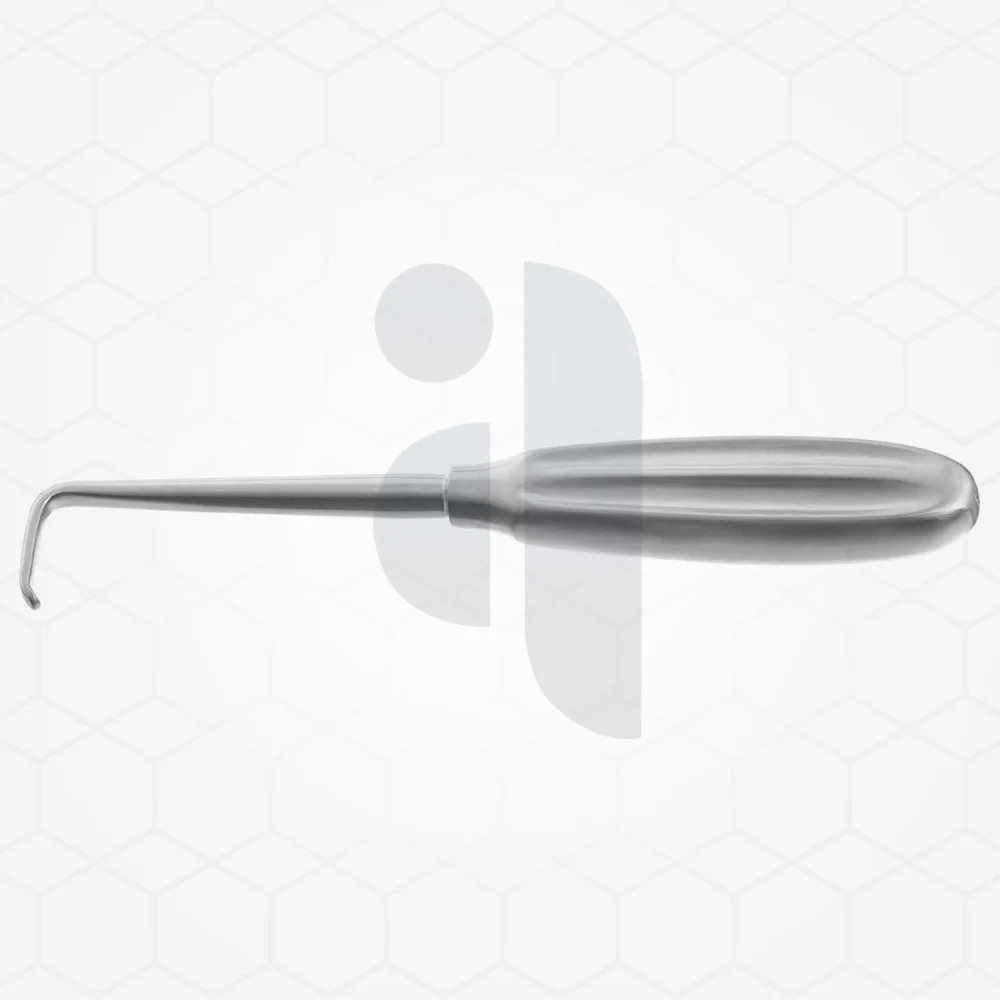
What is the Lahey retractor?
The Lahey retractor is a surgical instrument designed to retract tissues with firmness and stability. Its design, featuring hook-shaped ends, allows it to hold anatomical structures and keep them apart, giving the surgeon a clearer exposure of the working area.
It is frequently used in procedures where visual access is limited or where controlled traction of soft tissues is essential. Its presence is common in various specialities, including:
- ol]:!pt-0 [&>ol]:!pb-0 [&>ul]:!pt-0 [&>ul]:!pb-0″ value=”1″>General surgery
- ol]:!pt-0 [&>ol]:!pb-0 [&>ul]:!pt-0 [&>ul]:!pb-0″ value=”2″>Thyroid surgery
- ol]:!pt-0 [&>ol]:!pb-0 [&>ul]:!pt-0 [&>ul]:!pb-0″ value=”3″>Neck procedures
- ol]:!pt-0 [&>ol]:!pb-0 [&>ul]:!pt-0 [&>ul]:!pb-0″ value=”4″>Soft tissue surgery
- ol]:!pt-0 [&>ol]:!pb-0 [&>ul]:!pt-0 [&>ul]:!pb-0″ value=”5″>Interventions requiring precise dissection
What makes the Lahey retractor stand out is not just its shape, but its practical functionality. It allows for constant retraction without unduly compromising the tissue when handled with the proper technique.
Why visibility is so important in surgery
Good exposure is not a minor detail. It is one of the cornerstones of safe surgery. When the operative field is clearly visualised, the surgeon can better identify anatomical structures, avoid unintentional damage, and execute each step with greater confidence.
Poor visibility can lead to several problems:
- ol]:!pt-0 [&>ol]:!pb-0 [&>ul]:!pt-0 [&>ul]:!pb-0″ value=”1″>Increased surgical time
- ol]:!pt-0 [&>ol]:!pb-0 [&>ul]:!pt-0 [&>ul]:!pb-0″ value=”2″>Difficulty differentiating between anatomical planes
- ol]:!pt-0 [&>ol]:!pb-0 [&>ul]:!pt-0 [&>ul]:!pb-0″ value=”3″>Increased team fatigue
- ol]:!pt-0 [&>ol]:!pb-0 [&>ul]:!pt-0 [&>ul]:!pb-0″ value=”4″>Higher risk of accidental injury
- ol]:!pt-0 [&>ol]:!pb-0 [&>ul]:!pt-0 [&>ul]:!pb-0″ value=”5″>The need to frequently reposition instruments
This is where the Lahey retractor adds value. By separating tissues in a stable manner, it helps maintain a clean and accessible field. This allows intraoperative decisions to be made more quickly and accurately.
Benefits of the Lahey retractor in surgical precision
The use of the Lahey retractor offers clear advantages in scenarios where every millimetre counts. It is not just about “creating space,” but about establishing more controlled working conditions.
1. It improves exposure of the surgical field
The most obvious advantage is exposure. Effective retraction allows for better visualisation of vessels, nerves, tissue edges, and deep structures. This improved view reduces uncertainty and facilitates cleaner dissections.
In neck procedures, for example, stable exposure can make a significant difference when working near delicate structures.
2. It promotes more precise movements
When tissues are well retracted, the surgeon’s hand works with fewer interferences. This improves the precision of cuts, sutures, ligations, and fine dissections. It also helps to reduce compensatory movements that can affect the accuracy of the surgical action.
3. It provides stability during the procedure
Stability is a key factor in any intervention. If the field is constantly changing, the surgical rhythm is interrupted. The Lahey retractor helps to maintain a consistent position of the tissues, which promotes a more orderly operative flow.
4. It reduces unnecessary tissue handling
Every time a tissue is manipulated or repositioned unnecessarily, there is potential for additional trauma. An instrument that maintains secure retraction from the outset can reduce this repetitive handling and better preserve tissue integrity.
5. It facilitates the work of the surgical team
Surgery is a coordinated effort. When the instruments provide clear exposure, it doesn’t just help the lead surgeon. It also improves the work of assistants, scrub nurses, and technicians, who can better anticipate the steps of the procedure and respond more efficiently.
Frequent clinical applications
The Lahey retractor is used in different contexts but is particularly prominent in procedures where tissue control is essential. Its design allows it to hold structures with good firmness, which is useful when access is narrow or deep.
Thyroid and neck surgery
In thyroid surgery and other neck procedures, the Lahey retractor helps to retract soft tissues and improve the identification of sensitive anatomical structures. Adequate exposure in this area is critical, given the proximity to important nerves and vessels.
General surgery
It is also useful in various general surgery procedures, especially when it is necessary to keep tissue edges apart to facilitate dissection or closure. Its capacity for controlled traction can improve the operative sequence and reduce interruptions.
Soft tissue procedures
In cases where the delicate retraction of skin, fascia, or superficial muscle is required, this instrument can provide an effective combination of access and control.
Correct handling of the instrument: technique and safety
The performance of the Lahey retractor depends as much on its design as on how it is used. Poor application can cause excessive pressure, tissue trauma, or unstable retraction. That is why technique matters as much as the instrument itself.
Some best practices include:
- ol]:!pt-0 [&>ol]:!pb-0 [&>ul]:!pt-0 [&>ul]:!pb-0″ value=”1″>Placing the retractor with a direct view of the target tissue
- ol]:!pt-0 [&>ol]:!pb-0 [&>ul]:!pt-0 [&>ul]:!pb-0″ value=”2″>Avoiding excessive or prolonged traction without re-evaluation
- ol]:!pt-0 [&>ol]:!pb-0 [&>ul]:!pt-0 [&>ul]:!pb-0″ value=”3″>Adjusting the force according to the tissue type
- ol]:!pt-0 [&>ol]:!pb-0 [&>ul]:!pt-0 [&>ul]:!pb-0″ value=”4″>Coordinating its use with the dynamics of the procedure
- ol]:!pt-0 [&>ol]:!pb-0 [&>ul]:!pt-0 [&>ul]:!pb-0″ value=”5″>Frequently checking the integrity of the retracted tissues
During the closing phases or fine handling of the wound, coordination between instruments is essential. In this context, tools such as the suture plier can complement the team’s work by facilitating the safe handling of suture material and improving control during tissue approximation. When exposure has been adequately maintained with a Lahey retractor, these manoeuvres tend to be executed with greater precision and less unnecessary tension.
Complementary instruments in the surgical field
No instrument works in isolation. True performance in the operating theatre emerges when each tool fulfils its function within a well-organised sequence. The Lahey retractor integrates easily into this working ecosystem, especially in procedures that demand clear exposure, careful haemostasis, and precise manipulation.
Instruments that often complement this type of retraction include dissecting forceps, needle holders, additional retractors, haemostatic forceps, and suction systems. The choice depends on the procedure and the anatomy involved, but the principle is the same: to keep the field visible and under control.
In certain applications, tonsil forceps can also play a useful complementary role, particularly in situations requiring the precise grasping of tissue, material, or structures in confined spaces. Their use in combination with the stable retraction provided by the Lahey retractor can improve the organisation of the operative field and allow for a smoother technical sequence.
What makes the Lahey retractor a relevant tool today
Many surgical instruments have evolved with new materials, ergonomic designs, and adaptations for specific procedures. However, some remain indispensable for one simple reason: they work well. The Lahey retractor is one of them.
Reasons for its continued use in surgical practice
- ol]:!pt-0 [&>ol]:!pb-0 [&>ul]:!pt-0 [&>ul]:!pb-0″ value=”1″>Simple and functional design
- ol]:!pt-0 [&>ol]:!pb-0 [&>ul]:!pt-0 [&>ul]:!pb-0″ value=”2″>Good traction capability
- ol]:!pt-0 [&>ol]:!pb-0 [&>ul]:!pt-0 [&>ul]:!pb-0″ value=”3″>Adaptability to different procedures
- ol]:!pt-0 [&>ol]:!pb-0 [&>ul]:!pt-0 [&>ul]:!pb-0″ value=”4″>Ease of integration with other instruments
- ol]:!pt-0 [&>ol]:!pb-0 [&>ul]:!pt-0 [&>ul]:!pb-0″ value=”5″>Usefulness in surgical fields where exposure is critical
Its value lies not in complexity, but in consistency. It is a reliable tool for creating visual order in an environment where details matter immensely.
Key points for surgical teams and technicians
For professionals who prepare, select, or handle instruments, understanding the role of the Lahey retractor can improve the efficiency of the procedure. It is not enough to simply have it available on the surgical trolley. It is also important to recognise when to use it, how to present it, and which instruments to have ready in support.
Practical aspects to consider
- ol]:!pt-0 [&>ol]:!pb-0 [&>ul]:!pt-0 [&>ul]:!pb-0″ value=”1″>Check the condition of the retracting ends before the procedure
- ol]:!pt-0 [&>ol]:!pb-0 [&>ul]:!pt-0 [&>ul]:!pb-0″ value=”2″>Confirm that the size and design are appropriate for the planned surgery
- ol]:!pt-0 [&>ol]:!pb-0 [&>ul]:!pt-0 [&>ul]:!pb-0″ value=”3″>Anticipate its use in critical exposure stages
- ol]:!pt-0 [&>ol]:!pb-0 [&>ul]:!pt-0 [&>ul]:!pb-0″ value=”4″>Coordinate its availability alongside dissection and closure instruments
- ol]:!pt-0 [&>ol]:!pb-0 [&>ul]:!pt-0 [&>ul]:!pb-0″ value=”5″>Maintain rigorous cleaning and sterilisation to preserve its performance
A surgical technician who is well-acquainted with these needs can contribute directly to the smooth flow of the operation.
Conclusion
The Lahey retractor remains an essential instrument because it solves a fundamental need in surgery: to see better in order to work better. Its ability to improve exposure, stabilise tissues, and support precise manoeuvres makes it a valuable resource across multiple specialities.
For surgeons, scrub nurses, and technicians, its correct use can translate into a clearer operative field, more exact movements, and a more efficient surgical experience. In an environment where precision defines outcomes, having reliable tools is not optional. It is part of the standard of care.
If you are reviewing your instrument set or looking to optimise surgical preparation, it is worth paying attention to the role the Lahey retractor plays within the complete procedural workflow. Often, the most significant improvements begin with instruments that do their job well, time and time again.

