
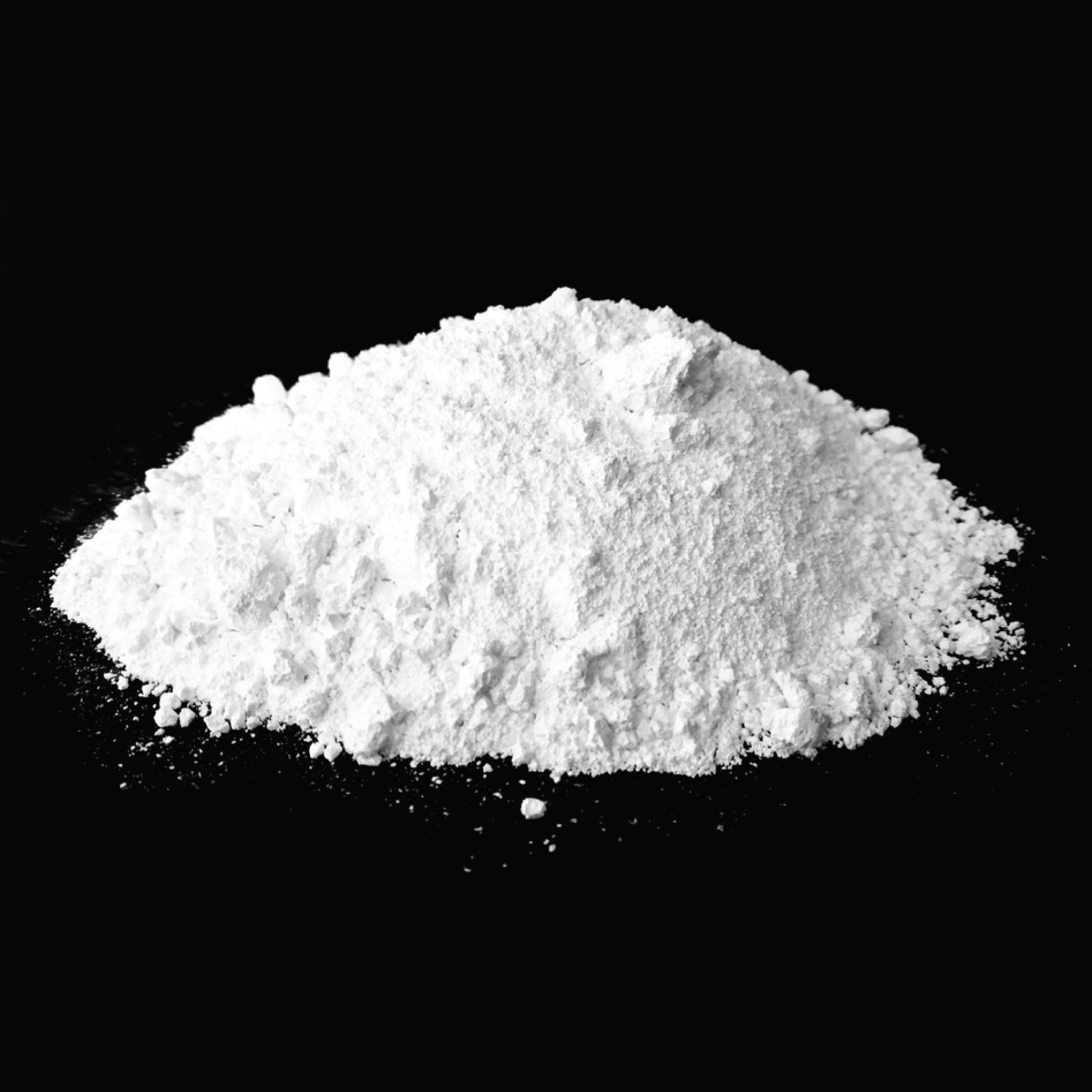
Rubber manufacturers often run into product failures that are hard to explain at first. Cracks appear too early. Tensile strength falls short. Batches behave inconsistently even when nothing in the process seems to have changed. In many of these cases, the issue traces back to a single raw material — the filler. When you use high-quality calcium carbonate powder in rubber compounding, the material works with your formulation. When the purity is low, it works against it.
This piece breaks down exactly what goes wrong, why it happens, and what to look for when sourcing.
What “Purity” Actually Means in Calcium Carbonate
Purity in calcium carbonate refers to the percentage of actual CaCO₃ in the material. A high-purity product typically contains 98% or above. What fills the remaining percentage matters a lot.
Common impurities found in low-grade calcium carbonate include silica, iron oxide, alumina, and other mineral residues. These aren’t inert. They react — sometimes with the rubber polymer itself, sometimes with curing agents, and sometimes with plasticizers. The result is unpredictable.
Surface treatment quality is another factor tied closely to purity. Coated grades rely on stearic acid or similar agents to bond with polymer chains. If the base material is impure, the coating doesn’t apply evenly. Uneven coating means poor dispersion in the rubber matrix, which creates weak spots.
How Impurities Disrupt Rubber Compounding
Here’s where things get practical. When impurities like silica or metal oxides enter the rubber mix, they interfere with vulcanization. The cross-linking that gives rubber its strength and elasticity becomes uneven. Some areas cure too fast. Others don’t cure enough.
This shows up as:
- Lower tensile strength — the rubber tears more easily under stress
- Reduced elongation at break — the material becomes brittle rather than flexible
- Poor abrasion resistance — surfaces wear down faster than expected
- Inconsistent hardness across batches — making quality control a constant headache
Iron oxide, even in small quantities, can accelerate aging in rubber. Products that should last years degrade noticeably faster. That’s a serious problem for anyone manufacturing seals, gaskets, hoses, or automotive parts.
The Particle Size Problem
Purity and particle size are connected issues. Low-grade calcium carbonate often has irregular particle size distribution — some particles are too coarse, others too fine.
Coarse particles act like stress points inside the rubber matrix. Under pressure or bending, cracks initiate at these spots. Fine particles that aren’t surface-treated properly tend to clump together instead of dispersing, creating hard agglomerates that behave similarly to contaminants.
A well-produced calcium carbonate for rubber should have a controlled D50 (median particle size) and a tight distribution curve. This is rarely guaranteed with low-purity sourcing.
What Manufacturers Often Overlook When Buying
Price is an obvious driver in raw material sourcing. Low-purity calcium carbonate is cheaper upfront. But the downstream math doesn’t always work out.
Higher rejection rates, customer complaints, or reformulation costs often exceed whatever was saved on the raw material. Some manufacturers only catch the problem after a finished goods failure — by which point the cost is much higher than a better filler would have been.
Things worth checking before you buy:
- CaCO₃ content percentage (ask for a technical data sheet, not just a product name)
- Surface treatment type and coverage uniformity
- Heavy metal content, specifically iron and lead
- Moisture content — wet material causes processing issues even before purity is a factor
- Particle size distribution data (D10, D50, D90 values)
If a supplier can’t provide these details readily, that tells you something.
Why Choose Sudarshan Group
Sudarshan Group produces calcium carbonate that is consistently tested for purity, particle size, and surface treatment performance before it leaves the facility. The CaCO₃ content meets 98%+ specifications, with documented data for each batch.
The company works directly with rubber compounders and understands what the material needs to do inside a formulation — not just how it looks on paper. Technical support is available for customers trying to optimize dosage levels or switch grades.
For rubber product manufacturers who’ve dealt with inconsistent fillers before, that kind of reliability isn’t a small thing. It changes how confidently you can run a production line.
Conclusion
Low purity in calcium carbonate isn’t just a chemical specification issue. It’s a practical problem that shows up as weaker rubber, shorter product life, and unpredictable processing. The impurities interfere with curing. The irregular particle size creates failure points. And the downstream cost of using the wrong material almost always outweighs the initial savings.
If you’re sourcing fillers for rubber compounding, purity documentation and particle size data should be non-negotiable. Sudarshan Group provides both, backed by consistent quality control across batches.
FAQs
- What purity level of calcium carbonate is suitable for rubber applications? For rubber compounding, a minimum purity of 97–98% CaCO₃ is generally recommended. Below that, impurities like silica and iron oxide can interfere with vulcanization and reduce mechanical properties.
- Does surface treatment matter in calcium carbonate for rubber? Yes. Surface-coated grades (typically with stearic acid) disperse better in rubber matrices and bond more effectively with polymer chains. Untreated or poorly coated material tends to agglomerate and create weak points.
- Why does my rubber batch hardness vary even when the process stays the same? Inconsistent raw material quality is a common cause. If the calcium carbonate filler has variable purity or particle size distribution across bags or lots, hardness and other properties will shift even without changes to your process parameters.
- Can low-grade calcium carbonate affect the shelf life of rubber products? Yes. Metal oxide impurities, particularly iron compounds, can accelerate oxidative aging in rubber. Products that should last several years may show degradation significantly earlier.
- How do I verify the quality of calcium carbonate before purchasing? Request a technical data sheet showing CaCO₃ percentage, particle size distribution (D10/D50/D90), moisture content, and heavy metal levels. A reliable supplier will provide these for every batch without hesitation.

